
















Greater Safety in Ongoing Operations
Especially with pressure vessel testing or machine maintenance: Those who see early what's changing can act in time.

Every pressure vessel, pipeline, and rotating machine in your facility carries a defined service life, and the gap between that design life and actual performance depends almost entirely on how rigorously you manage integrity. Asset Integrity Management is the structured discipline that closes that gap. It combines inspection data, corrosion monitoring, fitness-for-service assessment, and maintenance planning into a single, coherent program that tells you what condition your assets are in right now and what they will need next.
In sectors such as oil and gas, petrochemical processing, and energy generation, regulators and operators alike treat AIM as a non-negotiable baseline. Frameworks like API 510 for pressure vessels, API 570 for piping systems, and API 580 for risk-based approaches set the methodological standard, and inspection evidence is what gives those frameworks their teeth. Without reliable visual and dimensional data from inside your equipment, corrosion maps stay incomplete, fitness-for-service calculations rest on assumptions, and maintenance decisions carry avoidable uncertainty.
EVi Scopes develops video endoscopes and borescopes built specifically for the inspection work that feeds an AIM program. The instruments carry light into confined spaces, record what they find in high resolution, and hand that evidence directly to the engineers who need it. Whether you are running a scheduled internal inspection or responding to an unexpected finding, the quality of your imaging equipment shapes the quality of every integrity decision that follows.
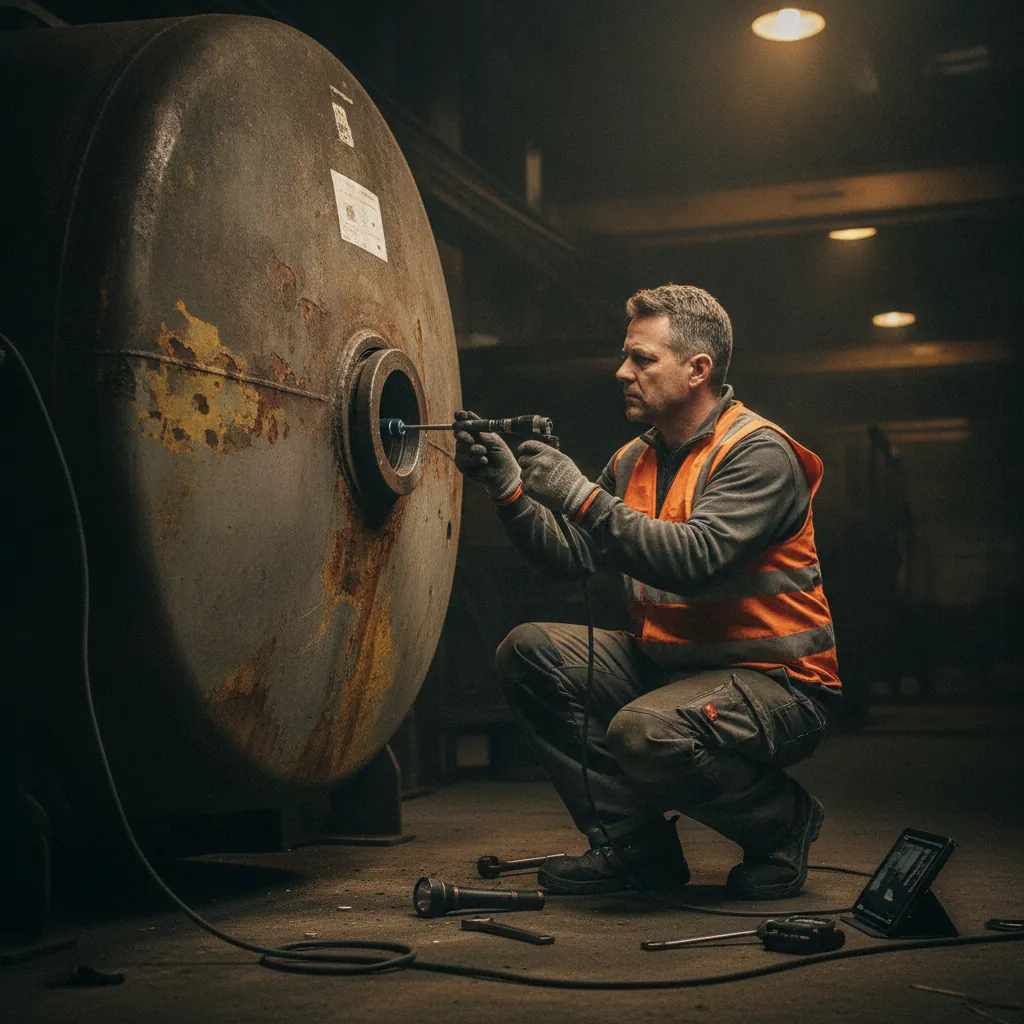
Accessing the internal surfaces of pressure vessels, heat exchangers, and buried pipelines is rarely straightforward. Nozzle openings are narrow, internal geometries are complex, and lighting conditions inside a corroded vessel are far from ideal. Inspectors often work under time pressure during planned shutdowns, where additional downtime carries a real operational cost. Getting a clear, well-lit image of a crack tip or a pitting cluster in those conditions demands instruments that perform reliably in confined, poorly lit environments.
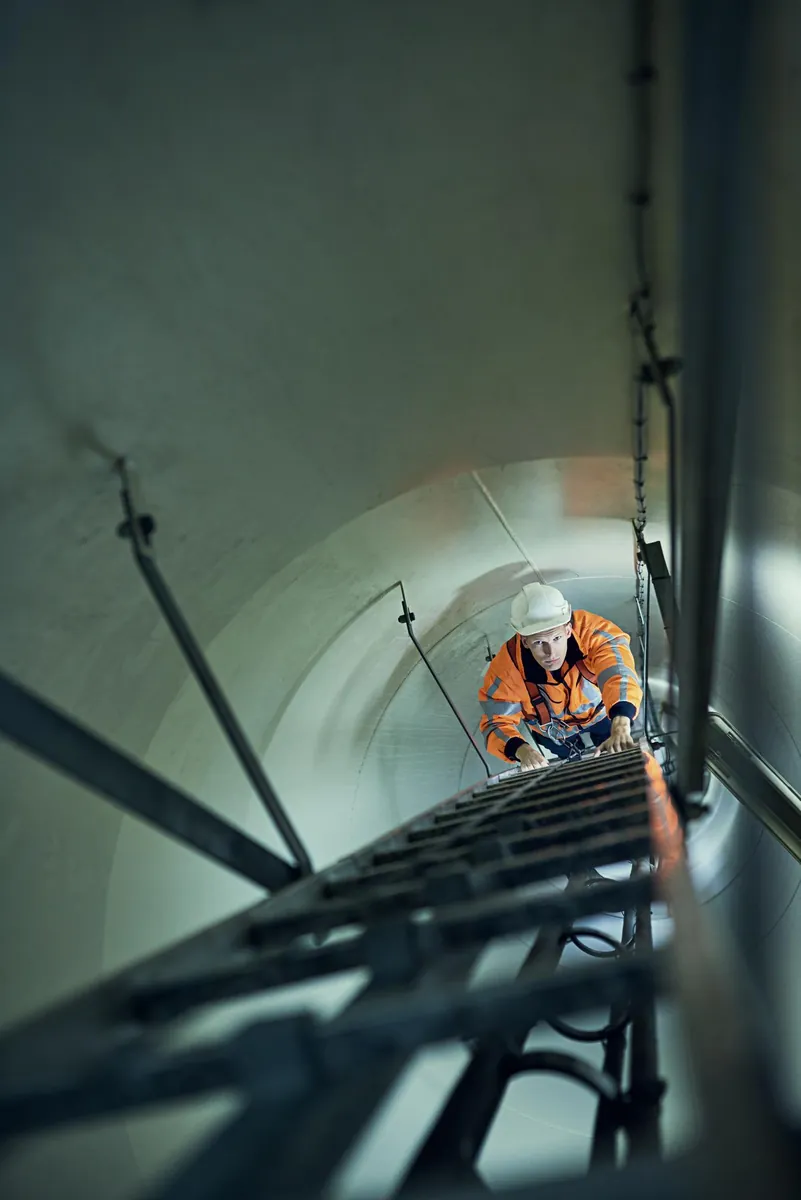
Corrosion does not announce itself. Pitting can develop in areas difficult to reach with a standard probe, and early-stage cracking may show no obvious surface signature until wall thickness is already compromised. A Risk Based Inspection program helps you prioritize where to look first by ranking assets according to probability and consequence of failure, but that ranking only holds if the inspection data feeding it is complete and accurate. Gaps in coverage or poor image quality translate directly into gaps in your integrity model, and those gaps are where unexpected failures originate. EVi Scopes video borescopes are built specifically to close those gaps in the most demanding confined-space environments.


Carrying out a credible Asset Integrity Management program means having the right optical tool for each inspection task. EVi Scopes offers articulating video endoscopes across the EVi 5, EVi 5.7, and EVi 6 series for flexible access inside vessels and pipelines, rigid borescopes from the EVi BS and EVi SD series for straight-line inspections, and pipe inspection cameras from the EVi R series for drainage and process pipework. Specialist variants add UV illumination at 365 nm for fluorescent penetrant checks, infrared capability, and high-resolution probe options for detailed surface assessment.
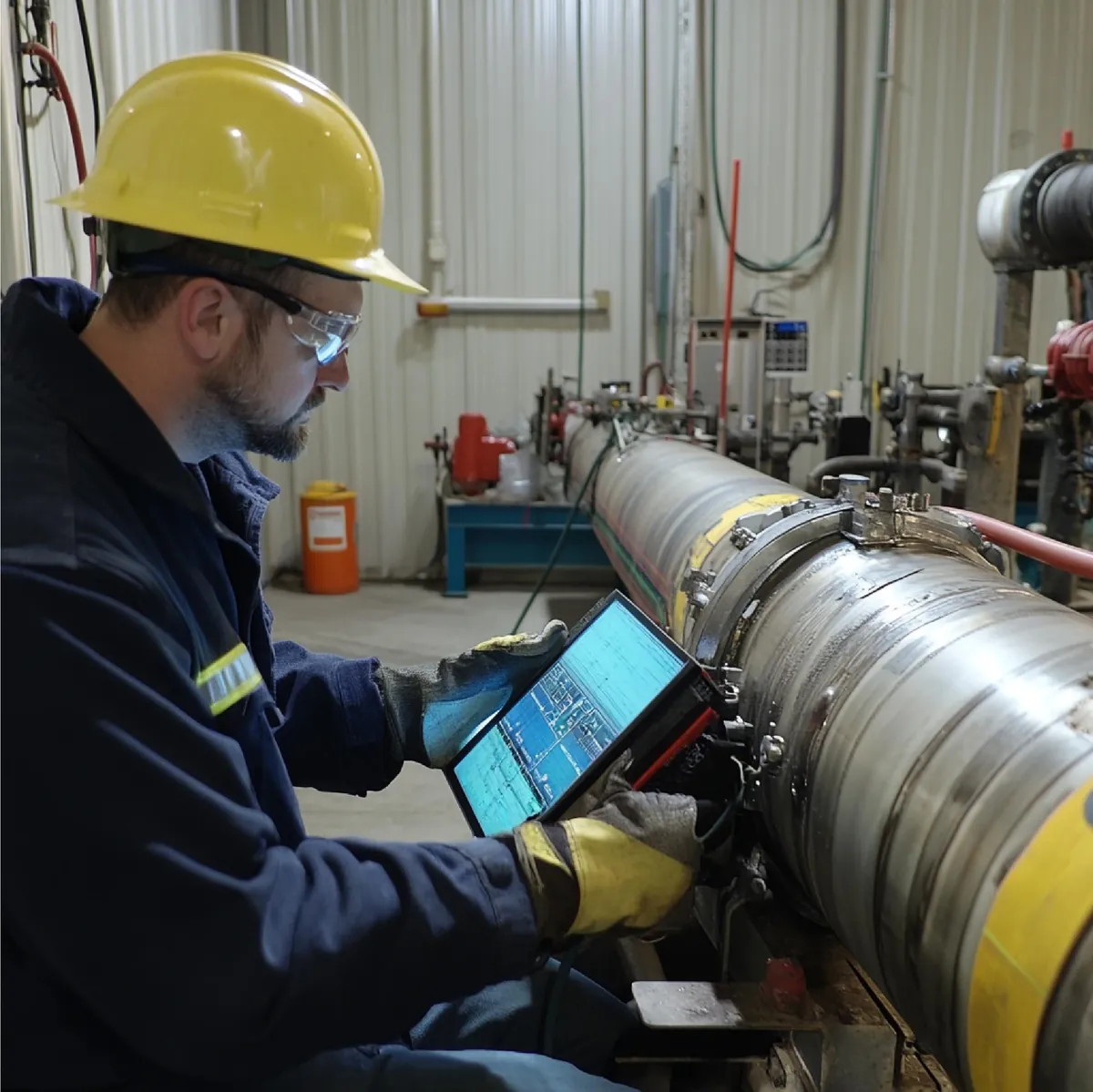
A corrosion map is only as reliable as the images that built it. When an inspector can position a probe precisely, hold it steady, and capture a sharp, well-lit frame of a pitting cluster or weld toe, the resulting measurement carries real weight in a fitness-for-service calculation. Articulating video endoscopes from the EVi 5 and EVi 5.7 series give you that control in tight geometries, with probe diameters suited to the nozzle sizes common in pressure vessel inspection. The EVi 6 series extends that capability to larger-bore equipment where image resolution across a wider field of view becomes the priority.
Some defect types only become visible under ultraviolet illumination. Fluorescent penetrant testing relies on UV light at 365 nm to activate the dye drawn into surface-breaking discontinuities, making cracks and porosity stand out clearly against the background. EVi Scopes instruments with integrated UV illumination bring that technique inside confined spaces where a separate UV lamp cannot reach, letting you combine visual inspection and penetrant testing in a single probe pass. That combination shortens inspection time during a shutdown and reduces the risk of missing a defect that white light alone would not reveal. For hydrostatic pressure testing follow-up work, where you need to confirm the source of any weepage or seepage detected during the pressure hold, UV-capable endoscopes give you a targeted, evidence-based answer without opening the equipment further than necessary.

A Risk Based Inspection program does not simply tell you to inspect more often. It tells you where to concentrate your inspection effort and, critically, when an inspection interval can be safely extended because the data justifies it. That distinction matters operationally because every internal inspection of a pressure vessel or heat exchanger requires a shutdown, isolation, purging, and entry preparation, all of which consume time and resources. When your inspection data is detailed enough to support a defensible RBI assessment, you gain the ability to align inspection windows with planned maintenance cycles rather than running them as separate events. The API 580 methodology formalizes this approach by requiring documented evidence of asset condition, failure mode analysis, and consequence evaluation before any interval adjustment is made. Hydrostatic testing sits alongside visual inspection in this framework: it confirms pressure boundary integrity at a defined test pressure, but it does not replace the internal surface examination that identifies the mechanisms driving degradation. Combining both methods within a structured AIM program gives you a complete picture of where an asset stands and how much of its remaining life you can confidently use. EVi Scopes integrates these steps into one audit-ready workflow.
Whether industrial endoscope, uv inspection light or camera system – we deliver what you need for your visual inspection. Tailored to your needs. Direct, robust, reliable. Get expert advice now. We help you select and properly apply your inspection technology.
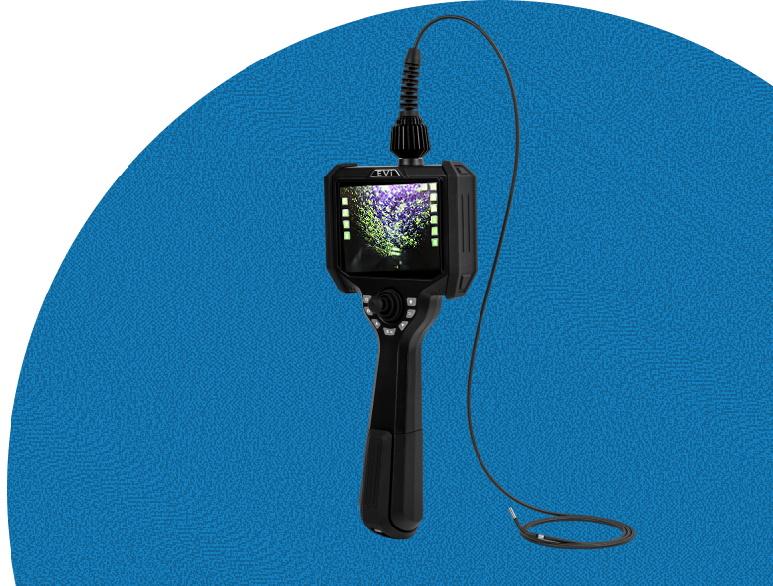
Selecting the right probe starts with the access geometry: nozzle diameter, insertion length, and whether the inspection path bends. For a pressure vessel with a standard manway and internal baffles, an articulating video endoscope from the EVi 6 series covers the main shell and head efficiently, while a smaller-diameter EVi 5 probe reaches nozzle bores and tight corner welds. Once the probe is positioned, the operator captures still images and video footage that feed directly into the inspection record. That record becomes the evidence base for the fitness-for-service engineer, the RBI analyst, and the maintenance planner working from the same dataset. Where fluorescent penetrant testing is part of the scope, switching to a UV-capable probe variant keeps the workflow continuous without changing the recording setup. For pipeline work, the EVi R series cameras advance through the pipe bore on a push-rod system, logging footage of internal surfaces along the full inspection length. Each instrument in the EVi Scopes range connects to a display unit that stores footage and allows on-site review, so the inspector can confirm coverage before the equipment is closed up and returned to service.
More than just a clear view
Especially with pressure vessel testing or machine maintenance: Those who see early what's changing can act in time.
No paper chaos, no follow-up submissions – results can be saved, traced and presented directly. Especially important for proof to authorities or customers.
In quality assurance, the difference between “looks good” and “is flawless” sometimes makes all the difference. Good images help with decision-making.
When multiple people inspect together – live or with saved images – decisions can be made faster and clearer. That saves time and nerves.
FAQ
Because many people are interested: Here you will find practical answers to frequently asked questions about our product portfolio and our services – explained in an understandable way, directly from practical experience.
Questions? We are happy to help.A fixed-interval schedule inspects every asset on the same cycle regardless of condition. A Risk Based Inspection program ranks assets by probability and consequence of failure, concentrating inspection effort where risk is highest and allowing longer intervals where condition data supports it under API 580 methodology.
Hydrostatic pressure testing confirms that a pressure boundary holds at a defined test pressure, typically applied after fabrication, repair, or a significant alteration. Within an AIM program it complements internal visual inspection, which identifies the corrosion mechanisms and surface conditions that hydrostatic testing alone cannot characterize.
The EVi 6 series suits larger nozzle bores and main shell inspections where a wider field of view is useful. For tighter nozzle entries and confined internal geometries, the EVi 5 and EVi 5.7 series offer smaller probe diameters with full articulation capability.
UV light at 365 nm activates fluorescent dye drawn into surface-breaking cracks and porosity during penetrant testing. Inside a confined vessel where a separate UV lamp cannot reach, an endoscope with integrated UV illumination makes those indications visible in a single probe pass alongside standard visual inspection.
Yes. EVi Scopes instruments connect to a display unit that stores still images and video footage on-site. That footage can be reviewed immediately after the inspection and exported as evidence for formal inspection records, fitness-for-service assessments, and RBI documentation.
Rigid borescopes from the EVi BS series require a straight, unobstructed path from entry point to target area. Articulating video endoscopes handle bends and internal obstructions. Knowing the nozzle diameter, insertion length, and number of direction changes before the inspection determines which instrument type is appropriate.
Fitness-for-service engineers use wall thickness measurements, corrosion rate estimates, and defect characterization from inspection images to calculate remaining life under ASME or API 579 criteria. The quality and coverage of the inspection images directly affect how conservative or precise that remaining-life estimate can be.
Internal visual inspection typically follows hydrostatic testing in a repair or post-construction sequence, confirming that no surface-breaking defects remain after pressure loading. In a routine shutdown inspection, the sequence depends on the scope, but visual inspection usually precedes any pressure test to identify conditions that could affect test validity.
Oil and gas production, petrochemical processing, refining, power generation, and offshore installations operate under the most formalized AIM requirements. Regulatory frameworks such as the UK HSE Safety Case Regulations and API standards in North American markets mandate documented integrity programs for pressure-containing equipment in these sectors.
An RBI program assigns each asset a risk ranking based on the likelihood of failure for its specific degradation mechanisms and the consequence severity if failure occurs. Assets with high probability and high consequence receive the earliest inspection slots, while lower-ranked assets may qualify for extended intervals supported by documented condition data.