















Greater Safety in Ongoing Operations
Especially with pressure vessel testing or machine maintenance: Those who see early what's changing can act in time.

Biomedical research demands precision at scales that are easy to underestimate. Whether a team is running drug discovery services in a university lab or conducting IND enabling studies ahead of a regulatory submission, the quality of what you can observe directly shapes the quality of what you can conclude. Missed surface defects on implantable devices, undetected contamination in tubing systems, or poorly documented tissue interactions can stall a program long before it reaches clinical evaluation.
EVi Scopes develops video endoscopes and rigid borescopes that give biomedical researchers a reliable, reproducible way to inspect small-bore structures, device components, and biological interfaces without destructive sampling. The EVi product lines cover a wide diameter range and include variants with white light, UV illumination at 365 nm, and infrared, giving research teams the flexibility to match the tool to the inspection task rather than the other way around. For biocompatibility testing, where surface condition and material integrity are central to the assessment, that kind of optical versatility matters. Preclinical work in particular benefits from inspection tools that produce still images and video documentation suitable for study records, regulatory packages, and cross-site reproducibility. When your findings need to hold up to external review, the instrument you use to gather them is part of the evidence chain.
Preclinical research programs often move fast, and inspection workflows can lag behind. A preclinical CRO managing multiple study arms simultaneously faces pressure to document device conditions, verify material surfaces, and capture evidence of biological interactions, all without disrupting sample integrity. Standard benchtop microscopy covers some of these needs, but it struggles with enclosed geometries, long narrow channels, and components that cannot be sectioned without destroying the sample. That gap becomes critical when regulatory reviewers expect photographic evidence of surface conditions across a device's full internal geometry.

For teams preparing preclinical research packages destined for regulatory submission, documentation gaps carry real consequences. Inspections recorded at insufficient resolution, or relying on methods reviewers consider poorly reproducible, can trigger requests for additional data. Repeating a study to satisfy a documentation query costs significant time and resources. EVi Scopes provides a dedicated optical inspection tool that captures calibrated video and still images from the outset, removing that risk before it enters the process.


EVi Scopes offers video endoscopes, rigid borescopes, and pipe cameras across multiple diameter and length configurations, with illumination options covering white light, UV at 365 nm, and infrared. For biomedical research teams, this means a single supplier can cover device inspection, tubing integrity checks, biocompatibility testing documentation, and fluorescence-based surface assessments. Each instrument produces recorded output suited to study files and regulatory packages.

In drug discovery services and preclinical programs, the instruments researchers choose tend to reflect the maturity of the program. Early-stage exploratory work tolerates some ambiguity, but once a candidate moves toward formal preclinical evaluation, every data point needs a defensible collection method. Optical inspection with a calibrated video endoscope gives teams a method that is reproducible across operators and sites, which matters when study data will be reviewed by external scientists or regulatory bodies. The EVi 5, EVi 5.7, and EVi 6 series each offer different diameter profiles and working lengths, so the right fit depends on the geometry of the component or structure being assessed rather than on a compromise.
UV illumination at 365 nm activates fluorescent markers and residues that white light inspection cannot reveal. For biocompatibility assessments and cleaning validation studies, this capability lets researchers confirm surface conditions with a level of specificity that photographic documentation under standard light simply cannot match. Infrared variants add thermal sensitivity for applications where heat distribution across a material surface is part of what is being studied. Taken together, these illumination options mean the inspection tool adapts to the research question rather than constraining it. EVi Scopes also produces custom configurations for teams with geometries or inspection requirements that fall outside standard product ranges.

Regulatory agencies reviewing IND packages and device submissions expect study sponsors to demonstrate control over every variable that could affect outcome data. For IND enabling studies, that includes the condition of delivery systems, device components, and any material that contacts biological tissue. ISO 10993, the international standard governing biocompatibility evaluation, requires characterization of device surfaces and materials, and inspection data contributes directly to that characterization. Agencies such as the FDA and EMA have issued guidance emphasizing that preclinical data packages should reflect the actual condition of the test article, not an assumed condition. Optical inspection tools that generate traceable image and video records give study sponsors a concrete way to satisfy that expectation. EVi Scopes fluorescence-based inspection under UV light is increasingly recognized as a method for detecting surface residues that chemical analysis alone might miss. Research teams working with contract research organizations benefit from understanding these expectations early, because retrofitting documentation to an existing dataset is far harder than building inspection into the study protocol from the start. Instrument choice at the protocol design stage is a regulatory decision as much as a scientific one.
Whether industrial endoscope, uv inspection light or camera system – we deliver what you need for your visual inspection. Tailored to your needs. Direct, robust, reliable. Get expert advice now. We help you select and properly apply your inspection technology.
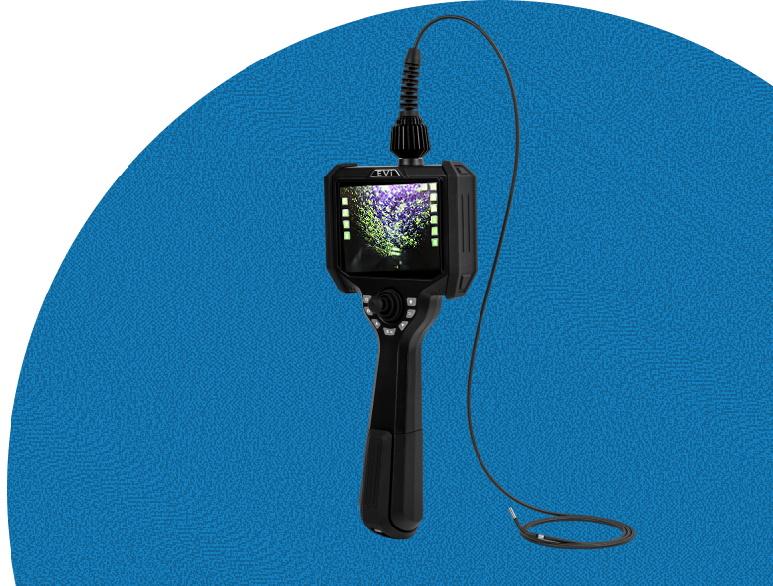
Integrating an optical inspection step into a preclinical study protocol is straightforward when the instrument is selected before data collection begins. A research team typically identifies the structures or components requiring inspection, then matches an EVi model to the relevant diameter, working length, and illumination requirement. For device biocompatibility work, this often means selecting a rigid borescope from the EVi BS or EVi SD series for accessible internal geometries, or a video endoscope from the EVi 5 or EVi 6 series for longer or more complex channels. Once the instrument is in use, captured images and video are stored as part of the study record, timestamped and linked to the specific sample or device lot. Teams preparing submissions for multiple regulatory jurisdictions find this documentation format compatible with both FDA and EMA expectations. EVi Scopes supports customers through the selection process, helping match instrument specifications to the inspection task rather than leaving that judgment entirely to the research team. For programs with non-standard geometries or specialized requirements, the Series S custom configurations provide a path to a purpose-built solution without the delays typically associated with bespoke instrumentation.

More than just a clear view
Especially with pressure vessel testing or machine maintenance: Those who see early what's changing can act in time.
No paper chaos, no follow-up submissions – results can be saved, traced and presented directly. Especially important for proof to authorities or customers.
In quality assurance, the difference between “looks good” and “is flawless” sometimes makes all the difference. Good images help with decision-making.
When multiple people inspect together – live or with saved images – decisions can be made faster and clearer. That saves time and nerves.
FAQ
Because many people are interested: Here you will find practical answers to frequently asked questions about our product portfolio and our services – explained in an understandable way, directly from practical experience.
Questions? We are happy to help.EVi Scopes instruments suit device surface inspection, tubing integrity checks, biocompatibility documentation, and cleaning validation. The range covers rigid and flexible configurations with white light, UV, and infrared illumination, making them applicable across preclinical, translational, and materials research workflows.
UV illumination at 365 nm excites fluorescent markers and surface residues invisible under white light. In biocompatibility testing, this allows researchers to detect contamination or coating inconsistencies on device surfaces with specificity that standard photographic documentation cannot provide, strengthening the evidence in a study record.
The EVi 5 and EVi 5.7 series cover small-diameter inspection tasks with working lengths suited to device channels and narrow internal geometries. The rigid EVi BS and EVi SD borescopes are well suited to accessible straight-bore structures where a rigid probe is practical and resolution is a priority.
Yes. Every EVi instrument captures still images and video that can be stored with timestamps and linked to specific sample or device lot records. This format aligns with documentation expectations from both the FDA and EMA for preclinical and device study packages.
The EVi BS series covers standard rigid borescope applications with fixed viewing angles. The EVi SD series offers rod-probe configurations suited to finer or more specialized inspection tasks. Selection depends on the bore diameter, required working length, and whether the geometry is straight or angled.
Instrument selection should happen at protocol design, before data collection begins. Choosing the tool after the study is underway risks documentation gaps that are difficult to address retroactively, particularly when regulatory reviewers expect inspection records to cover the full study period.
Yes. EVi Scopes offers Series S custom configurations for research programs with geometries or inspection requirements outside standard product ranges. These purpose-built instruments are developed in consultation with the research team to match the specific access constraints and imaging requirements of the application.
IND enabling studies require evidence that test articles were in the expected condition throughout the study. Optical inspection records from an EVi instrument provide traceable, timestamped evidence of device surface condition and material integrity, directly supporting the data package submitted to regulatory agencies.
Several EVi models are available with selectable or interchangeable illumination, allowing a single instrument to cover white light and UV inspection tasks. For infrared requirements, dedicated IR variants exist. The appropriate configuration depends on the specific inspection tasks within the study protocol.
EVi Scopes works with research teams and procurement contacts to match instrument specifications to the inspection task. This includes reviewing bore diameters, working lengths, illumination needs, and documentation requirements, so the selected instrument fits the study protocol rather than requiring the protocol to accommodate the tool.