


















Greater Safety in Ongoing Operations
Especially with pressure vessel testing or machine maintenance: Those who see early what's changing can act in time.
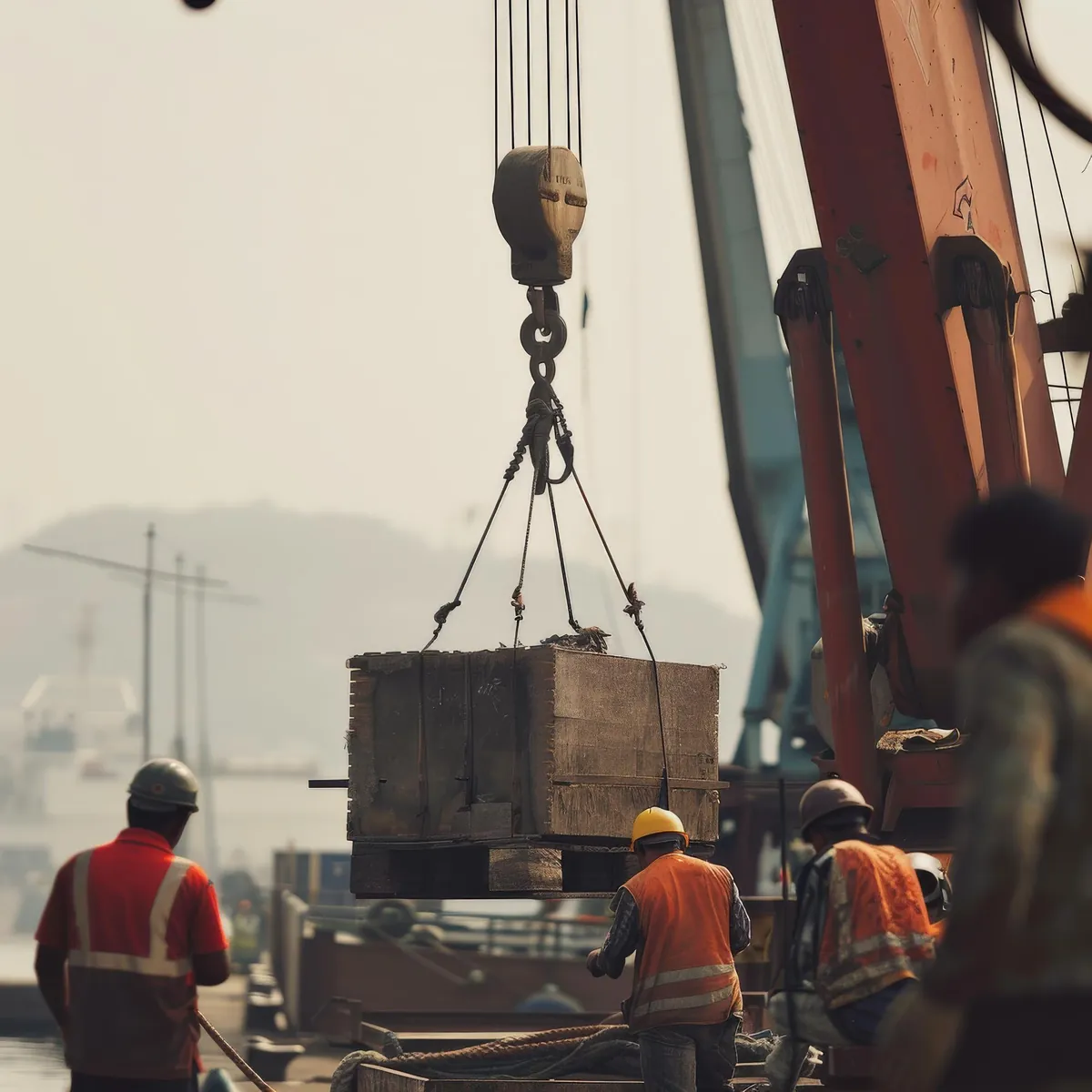
Construction machinery operates under conditions that push components to their limits. Cranes lift loads measured in tonnes at height, forklifts cycle through hundreds of picks a day, and hoists bear dynamic stress every time they run. When a component fails in that environment, the consequences reach far beyond a repair bill. Regulatory frameworks in most markets require documented inspection intervals for lifting and load-bearing equipment, and inspectors need reliable ways to see inside structures that are otherwise inaccessible without disassembly.
A slender probe fed through an access port reaches the interior of a crane boom section, a forklift mast channel, or a hoist drum housing without taking the machine out of service for longer than necessary. The inspector sees a live image, records still frames or video, and builds a documented evidence trail that satisfies both internal maintenance records and external audit requirements.
Heavy equipment inspection has grown more demanding as fleets age and utilization rates climb. Telematics data can flag anomalies in load cycles or operating temperatures, but it cannot show a hairline crack forming inside a structural weld or a corrosion pocket developing behind a sheave. Only a visual tool inserted at the right point delivers that kind of evidence. EVi Scopes designs its video endoscope range specifically for industrial inspection work, where image clarity, probe durability, and documentation capability all matter equally.
Structural components on cranes, hoists, and forklifts are designed to carry load, not to offer convenient inspection access. Boom sections are welded closed, mast channels run the full height of a forklift carriage, and hoist drums sit inside housings that require significant dismantling to expose. An inspector working with conventional tools faces a straightforward problem: the areas most likely to accumulate fatigue damage or corrosion are the hardest to reach.
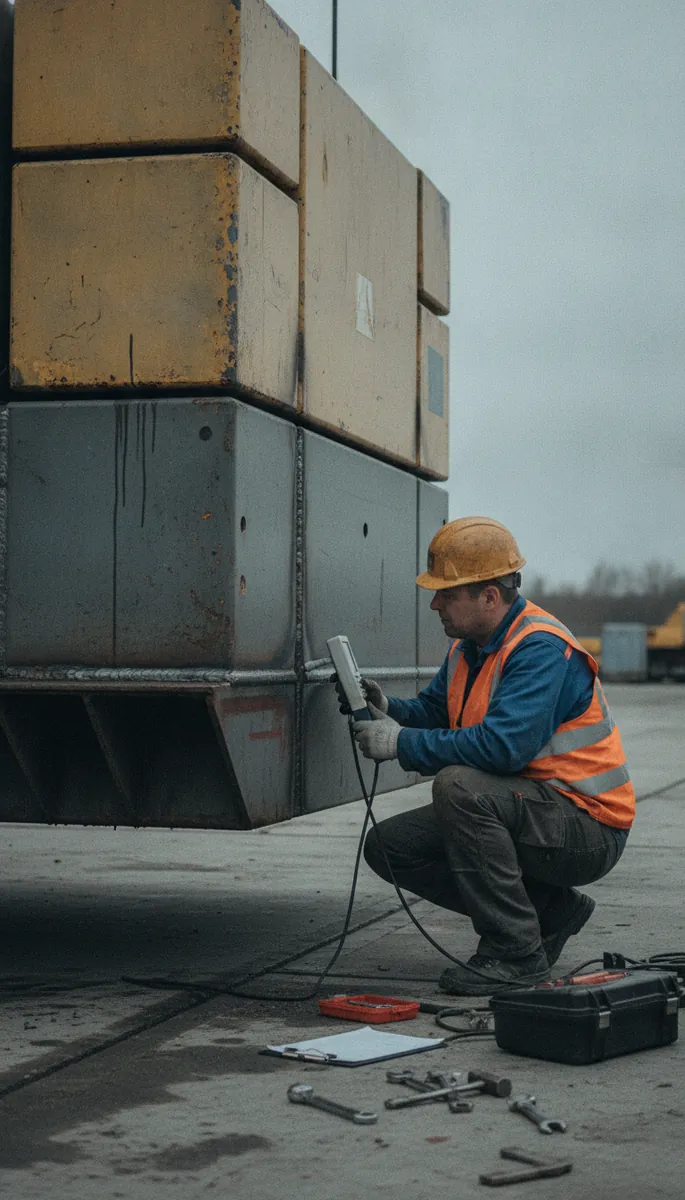
Rigging inspection adds another layer of complexity. Wire rope terminations, shackle bores, and hook throats all develop wear patterns that are invisible from the outside but detectable with a probe camera inserted through a fitting port or alongside a rope run. The same applies to forklift inspection, where the inner faces of mast rails and lift chain attachment points sit behind components that take considerable time to remove. EVi Scopes video endoscopes with articulating tips navigate these geometries quickly, and the recorded footage becomes part of the inspection report without any additional step.


EVi Scopes offers video endoscopes across several series, from the compact EVi 5 and EVi 5.7 lines through to the larger EVi 6 and EVi 8.0 platforms, with variants carrying white light, UV illumination at 365 nm, or infrared. Rigid borescopes in the EVi BS and EVi SD series suit straight-line access paths, while the EVi R series pipe cameras handle tubular structures. Each configuration addresses a specific geometry found in construction equipment, so you can match the tool to the inspection task rather than adapting your method to the tool.
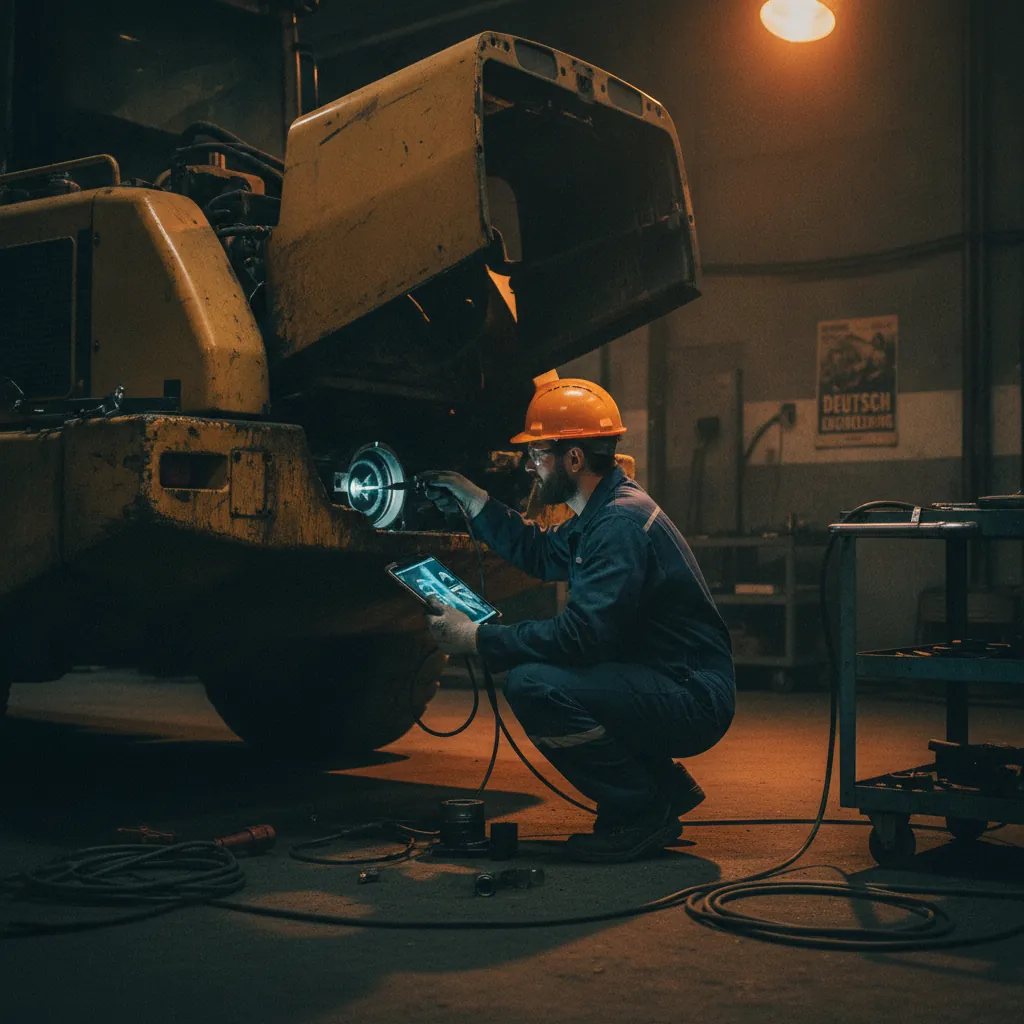
Construction sites are not laboratory environments. Probes encounter hydraulic fluid residue, metal swarf, concrete dust, and temperature swings that would degrade a consumer-grade camera within a few inspection cycles. EVi Scopes builds its video endoscope series for exactly that kind of sustained industrial use. The probe shafts resist the abrasion of tight metal channels, and the optical systems maintain image quality even when the tip is coated with the light contamination typical inside a crane slewing ring cavity or a hoist gearbox.
Beyond durability, the documentation workflow matters as much as the image itself. Crane inspection records submitted to a certifying body need timestamped evidence, not verbal descriptions. EVi Scopes devices capture still images and video directly to storage, giving the inspector a complete, ordered record at the end of each session. The EVi 5.7 and EVi 6 series both support this workflow with integrated display and recording functions, so the inspector works with a single device rather than managing a separate capture unit. For hoist inspection and rigging inspection tasks where access windows are narrow and time on the machine is limited, that efficiency directly reduces the period the equipment stands idle.

Lifting equipment sits at the intersection of two pressures that rarely ease: statutory inspection intervals mandated by occupational safety regulations, and the commercial pressure to keep machines productive. In most jurisdictions, cranes, hoists, and forklifts must undergo documented inspections at defined intervals, with more frequent checks triggered by high utilization or adverse operating conditions. Fleet managers who rely on visual inspection alone, without a tool capable of reaching internal surfaces, routinely face a choice between accepting an incomplete inspection record or committing to a full strip-down that removes the machine from the schedule for days. Video endoscopy changes that calculation. A trained inspector can work through a structured checklist of internal access points, including boom heel pins, hoist drum flanges, and forklift carriage weld toes, within a single shift. The resulting documented evidence supports both the maintenance record and any insurance or liability review that follows an incident. EVi Scopes applies this method to aging fleets where replacement cycles have lengthened under capital constraints, making early defect detection a direct factor in managing both safety and operating cost.
Whether industrial endoscope, uv inspection light or camera system – we deliver what you need for your visual inspection. Tailored to your needs. Direct, robust, reliable. Get expert advice now. We help you select and properly apply your inspection technology.
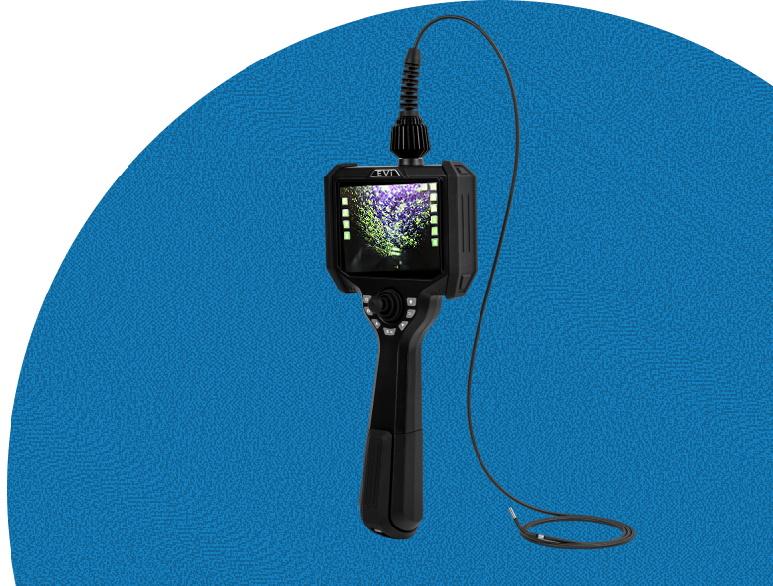
A practical inspection session starts with identifying the access points relevant to the component under review. On a crane, that typically means boom section joints, pin bores, and the interior faces of box-section members where moisture can pool. On a forklift, the mast rail channels and the anchor points of the lift chains are the primary targets. The inspector selects the appropriate probe diameter and tip articulation range for the geometry, inserts the probe, and navigates to the area of interest while watching the live feed on the integrated display. When the camera reaches a point of concern, a still image or short video clip is saved directly to the device.
After working through all planned access points, the inspector exports the recorded files and attaches them to the inspection report. That sequence works equally well for a scheduled periodic check and for a condition assessment triggered by a telematics alert or an operator report. EVi Scopes probes with articulating tips handle the directional changes inside a crane boom section without requiring the inspector to reposition the machine. For rigging inspection, the narrower probes in the EVi 5 series fit the bore diameters common in shackles and hook fittings.
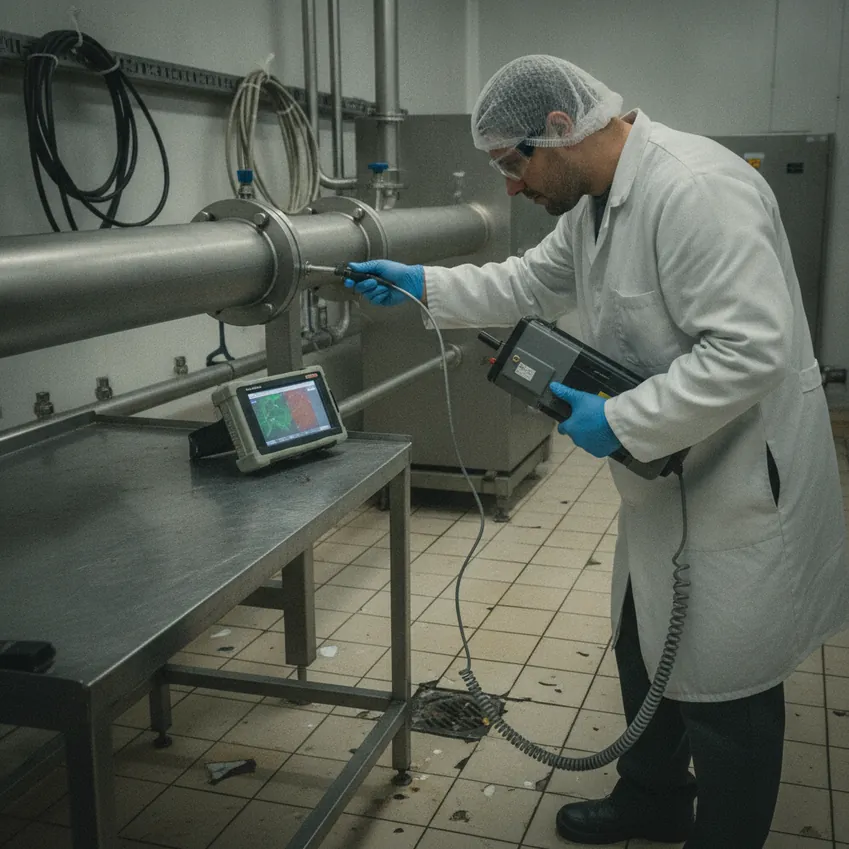
More than just a clear view
Especially with pressure vessel testing or machine maintenance: Those who see early what's changing can act in time.
No paper chaos, no follow-up submissions – results can be saved, traced and presented directly. Especially important for proof to authorities or customers.
In quality assurance, the difference between “looks good” and “is flawless” sometimes makes all the difference. Good images help with decision-making.
When multiple people inspect together – live or with saved images – decisions can be made faster and clearer. That saves time and nerves.
FAQ
Because many people are interested: Here you will find practical answers to frequently asked questions about our product portfolio and our services – explained in an understandable way, directly from practical experience.
Questions? We are happy to help.Forklift mast channels typically suit the EVi 5 or EVi 5.7 series, whose slender probe shafts fit the narrow clearances between rail faces and carriage components without requiring partial disassembly of the mast assembly.
UV illumination at 365 nm activates fluorescent penetrant residues and certain corrosion indicators, making surface-breaking cracks and porosity visible in welds on crane structural members and rigging fittings that white light alone would miss.
Yes. EVi Scopes devices save timestamped still images and video directly to onboard storage. Those files can be exported and attached to formal inspection documentation, satisfying the evidence requirements of most certifying bodies and insurance auditors.
With access points pre-identified and the correct probe selected, an inspector can typically work through the primary internal check points of a single boom section within one shift, without removing the boom from the crane.
The access port should be clear of loose debris and any pressure should be relieved before insertion. A light wipe of the port edge prevents abrasive particles from contacting the probe shaft during entry.
The EVi 6 series probe shafts are built for industrial environments and tolerate light fluid contamination. For heavily flooded cavities, wiping the access port and allowing excess fluid to drain before insertion protects image quality and probe longevity.
An articulating tip lets the inspector steer the camera around direction changes inside a closed box section without withdrawing and reinserting the probe. This keeps the inspection continuous and reduces the time the machine stands idle.
The EVi 5 series narrow probes suit shackle bores and hook throats, while the EVi 5.7 series handles slightly larger termination fittings. Both record footage that documents the internal condition of the fitting at the time of inspection.
Several EVi Scopes models are available in variant configurations covering white light, UV at 365 nm, and infrared. Selecting the appropriate variant for each task, or using a multi-illumination model, lets a single device cover both standard visual and fluorescent inspection passes.
Unscheduled inspections are commonly triggered by telematics anomalies, operator-reported unusual noise, or a load event that exceeds rated capacity. A video endoscope can be deployed immediately after the machine is made safe, delivering internal evidence within the same working day.