
















Greater Safety in Ongoing Operations
Especially with pressure vessel testing or machine maintenance: Those who see early what's changing can act in time.

Every power plant, whether it burns gas, splits atoms, or catches wind, depends on components that degrade invisibly. Turbine blades accumulate deposits. Heat exchanger tubes develop cracks. Boiler walls thin from the inside. Power generation inspection exists precisely because these failures do not announce themselves until the damage is already costly or dangerous.
Visual inspection with an industrial endoscope lets engineers see inside combustion chambers, generator casings, and pipe networks without dismantling them. That matters enormously in an industry where planned outages are scheduled months in advance and unplanned shutdowns translate directly into lost output and contractual penalties. A video endoscope threaded through an access port can confirm whether a turbine blade needs replacement now or can safely run another season, turning a guesswork decision into a documented one.
The energy sector spans an unusually wide range of operating environments. A combined-cycle gas plant runs at temperatures and pressures that stress inspection equipment as much as the plant itself. A nuclear facility adds radiation exposure and strict contamination protocols. Offshore wind installations bring salt air and confined nacelle spaces where a probe must fit through a narrow service opening and return usable footage on the first attempt. Across all of these environments, EVi Scopes designs its video endoscope range to deliver clear, recordable imagery without requiring repeated access.
Access is the first obstacle. Turbine casings, heat recovery steam generators, and reactor pressure vessels were not designed with inspection convenience in mind. Ports are narrow, internal geometries are complex, and the component you need to examine is often at the end of a long, curved path. An industrial inspection camera that cannot articulate precisely or transmit a sharp image through a tight bend simply cannot do the job, regardless of how capable it looks on a data sheet.
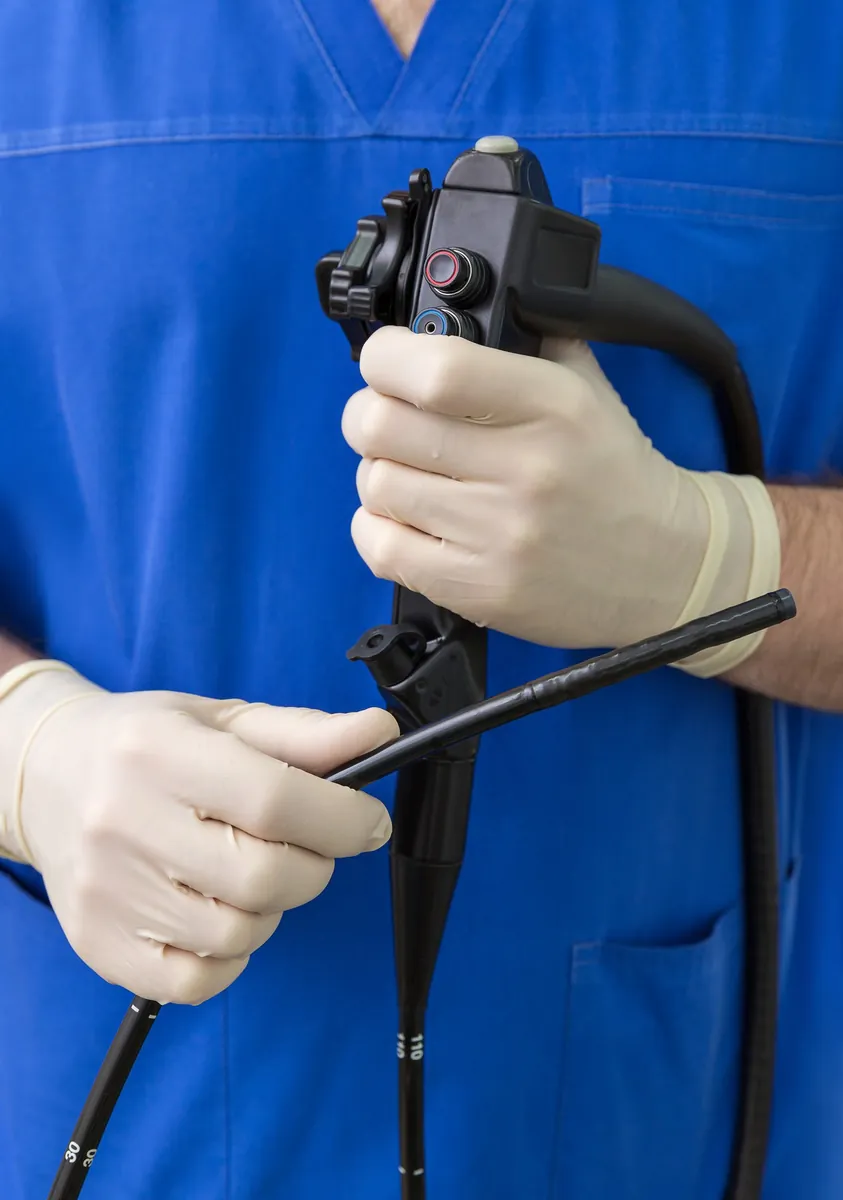
Beyond access, the operating conditions inside power generation equipment are among the most demanding in any industry. Residual heat in a recently shut-down gas turbine can exceed what standard endoscope optics tolerate. In nuclear environments, radiation degrades sensor electronics over repeated exposures, making material selection a critical design consideration. Offshore and hydropower sites add moisture ingress and vibration. Each factor narrows the field of tools that will perform reliably when the maintenance window opens. EVi Scopes builds its inspection systems around exactly these conditions, so the equipment holds up when pressure to complete the job is highest.


EVi Scopes offers video endoscopes, rigid borescopes, and pipe inspection cameras across multiple diameter and length configurations, covering the full range of access geometries found in power generation assets. Variants with white light, UV illumination at 365 nm, and infrared capability address different defect types, from surface cracks and coating failures to heat signatures that standard visible-light optics would miss entirely. Custom configurations are available for applications where standard series dimensions do not fit the access geometry.
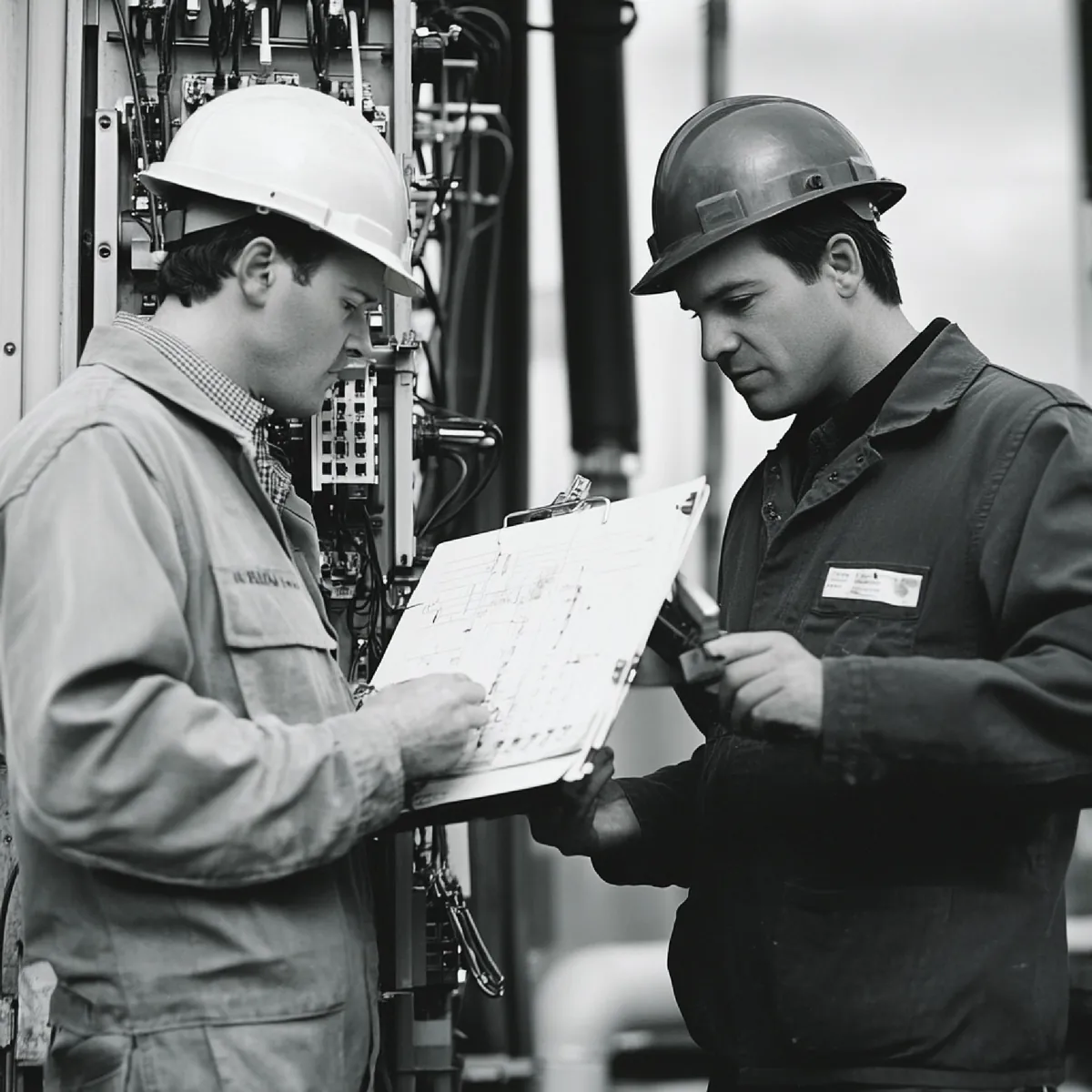
A general-purpose endoscope borrowed from a medical or automotive context will struggle in a power plant environment. The articulation range, probe stiffness, and optical resolution that work well in a car engine bay are rarely adequate when you need to navigate a multi-meter insertion path inside a steam turbine and then hold a steady image on a blade root while a technician documents the finding. Electric power generation inspection demands tools engineered for industrial duty cycles, not adapted from lighter applications.
EVi Scopes builds its EVi series with this gap in mind. The ability to switch between white light, UV, and infrared illumination within the same inspection session means a single tool can first map visible surface condition, then reveal fluorescent indications under UV that confirm or rule out a crack, and finally capture thermal contrast data that points to subsurface anomalies. That optical versatility reduces the number of separate inspection passes required during a maintenance outage, which directly compresses the time a unit spends offline. The EVi 5, EVi 5.7, and EVi 6 series each offer these illumination variants, and the Series S accommodates customer-specific probe geometries for installations where standard dimensions cannot reach the target area.
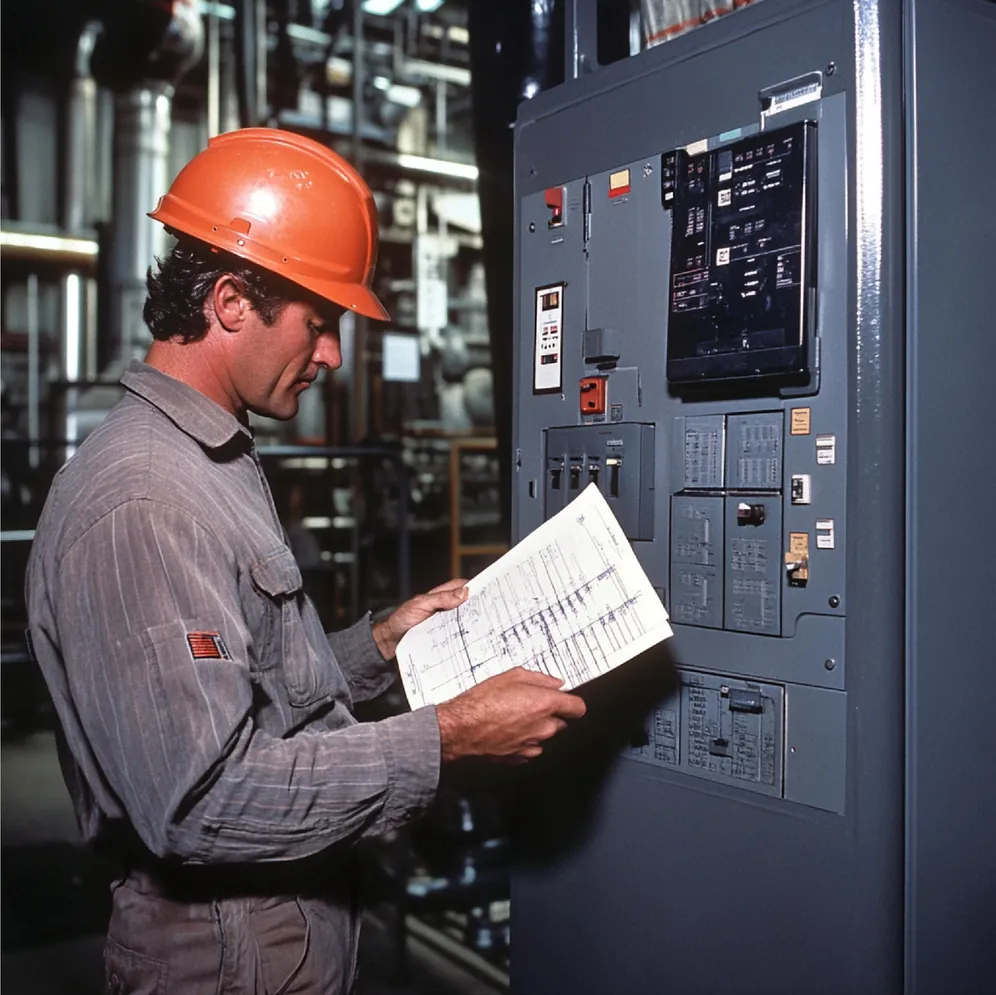
Power plant maintenance runs on tightly controlled outage windows. A combined-cycle gas turbine follows a scheduled inspection interval tied to fired hours and starts, and the maintenance team must complete every inspection task, document findings, and clear the unit for return to service within that window. Any tool that requires repeated insertions because image quality was insufficient, or that fails mid-inspection and needs replacement, consumes time the schedule does not have. This is why nuclear power plant inspection and gas turbine inspection alike have moved toward video endoscopes with onboard recording: the technician captures footage in a single pass, and engineers review it afterward at full resolution, reducing both time in the access port and the risk of a missed indication. Renewable assets bring a different rhythm. Offshore wind nacelles are inspected during weather windows that may close unpredictably, so a compact, quickly deployable camera system matters as much as image quality. Hydropower penstocks and draft tubes require pipe inspection cameras capable of navigating long straight runs with occasional bends, where EVi Scopes EVi R series fits naturally into the workflow.
Whether industrial endoscope, uv inspection light or camera system – we deliver what you need for your visual inspection. Tailored to your needs. Direct, robust, reliable. Get expert advice now. We help you select and properly apply your inspection technology.
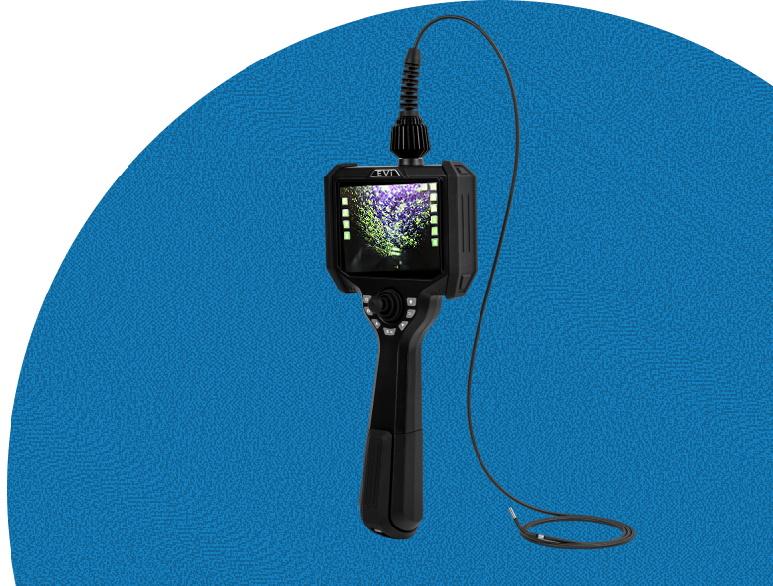
A power plant inspection with a video endoscope follows a predictable sequence, and understanding it helps you select the right tool configuration before the outage begins. The technician identifies the access port, confirms the insertion path length and any bends, then selects a probe diameter and articulation range that reaches the target component without forcing. Once inserted, the articulating tip steers toward the area of interest while the operator monitors live video on the integrated display. Where UV illumination is active, fluorescent penetrant indications glow immediately against the background, making crack detection faster and less dependent on operator experience alone. EVi Scopes records footage continuously, so the full inspection is available for engineering review, regulatory documentation, or comparison against the previous outage's findings. For pipe systems, the EVi R camera series adds a push-rod mechanism that advances the probe along straight runs and through gentle bends, covering longer distances than a handheld insertion allows. After the inspection, recorded files transfer directly to a laptop or facility documentation system, completing the audit trail that regulated industries require. The whole process fits within the compressed timelines that power generation maintenance demands.
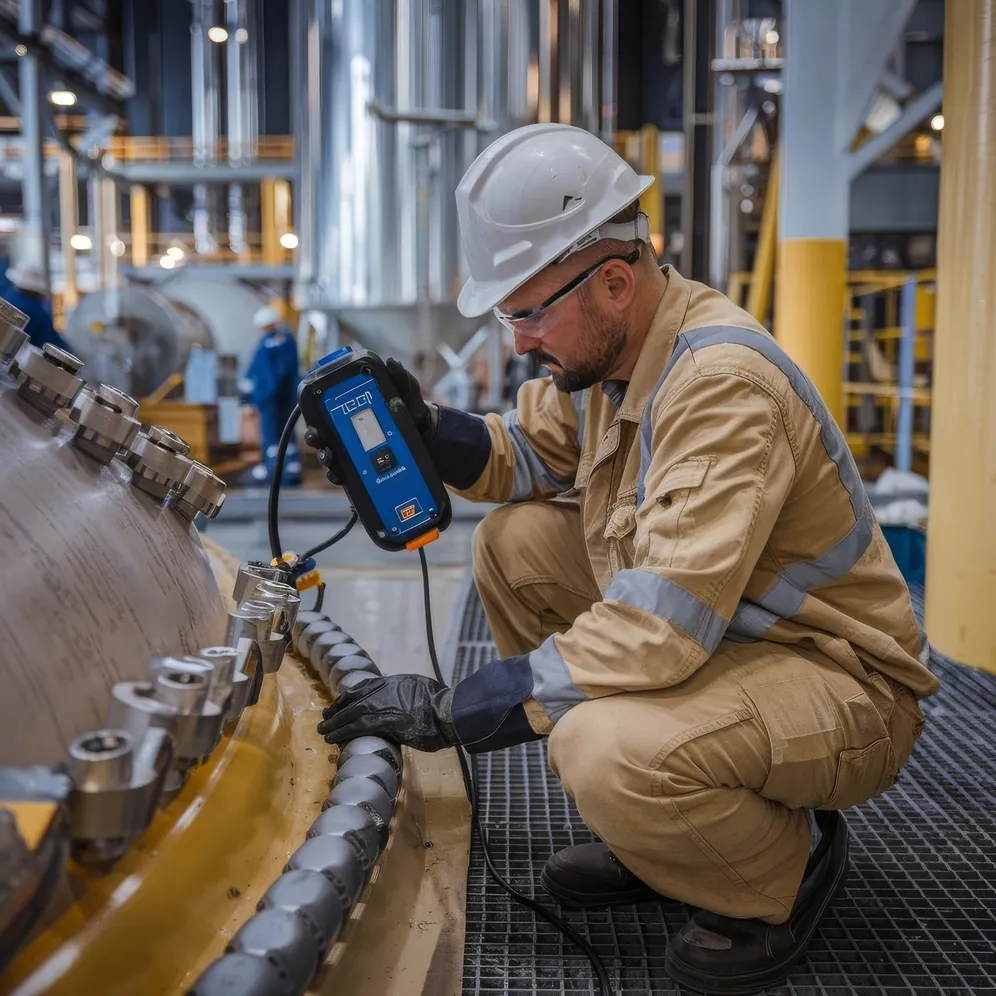
More than just a clear view
Especially with pressure vessel testing or machine maintenance: Those who see early what's changing can act in time.
No paper chaos, no follow-up submissions – results can be saved, traced and presented directly. Especially important for proof to authorities or customers.
In quality assurance, the difference between “looks good” and “is flawless” sometimes makes all the difference. Good images help with decision-making.
When multiple people inspect together – live or with saved images – decisions can be made faster and clearer. That saves time and nerves.
FAQ
Because many people are interested: Here you will find practical answers to frequently asked questions about our product portfolio and our services – explained in an understandable way, directly from practical experience.
Questions? We are happy to help.The right diameter depends on the specific port size and insertion path of your turbine model. EVi Scopes offers the EVi 5, EVi 5.7, and EVi 6 series at different outer diameters, covering most standard combustion chamber access ports. Contact EVi Scopes with your port dimensions to confirm the best match.
UV illumination at 365 nm excites fluorescent penetrant that has been applied to a surface beforehand. Any crack or discontinuity that has absorbed the penetrant glows visibly under UV, making indications easier to identify in a single inspection pass without relying solely on reflected white-light contrast.
EVi Scopes designs its EVi series for industrial environments, but residual temperature at the inspection point should be within the probe's rated operating range. Always confirm the component temperature has dropped to a safe level before insertion. EVi Scopes can advise on temperature limits for specific models.
The EVi 5 series covers smaller diameter applications, while the EVi 6 series offers a larger probe body suited to wider access ports and longer insertion paths. Both series are available with UV, infrared, and white-light illumination variants, so the choice turns primarily on access geometry.
The EVi R pipe inspection camera series uses a push-rod mechanism that advances the probe along straight runs and through gentle bends. This allows the camera to reach components at distances that a handheld insertion cannot cover, making it practical for penstock inspections and long heat exchanger tube runs.
EVi Scopes endoscopes record footage as standard video files that transfer to a laptop or documentation system. Whether that format satisfies a specific nuclear facility's regulatory requirements depends on the facility's own documentation protocols. EVi Scopes can discuss file format options to support your compliance workflow.
Infrared variants detect thermal contrast, revealing heat signatures that indicate subsurface anomalies, insulation failures, or hot spots invisible under white light. Choose an infrared model when your inspection objective includes identifying temperature distribution rather than surface condition alone, for example in boiler wall or electrical enclosure checks.
Setup is straightforward: connect the probe to the display unit, select the illumination mode, and insert. Most technicians are operational within a few minutes of opening the access port. The integrated display shows live video immediately, and recording starts with a single control input, keeping setup time well within tight outage schedules.
The minimum port size depends on the probe series selected. The EVi 5 series requires the smallest opening, while the EVi 6 series needs a correspondingly larger port. EVi Scopes publishes outer diameter specifications for each series, and the support team can help you match probe dimensions to your available access points.
Yes. The EVi Scopes Series S covers customer-specific configurations, including non-standard probe lengths, diameters, and tip geometries. If your installation has an access path that standard series dimensions cannot reach, contact EVi Scopes with the geometry details to discuss a tailored solution.