

















Greater Safety in Ongoing Operations
Especially with pressure vessel testing or machine maintenance: Those who see early what's changing can act in time.
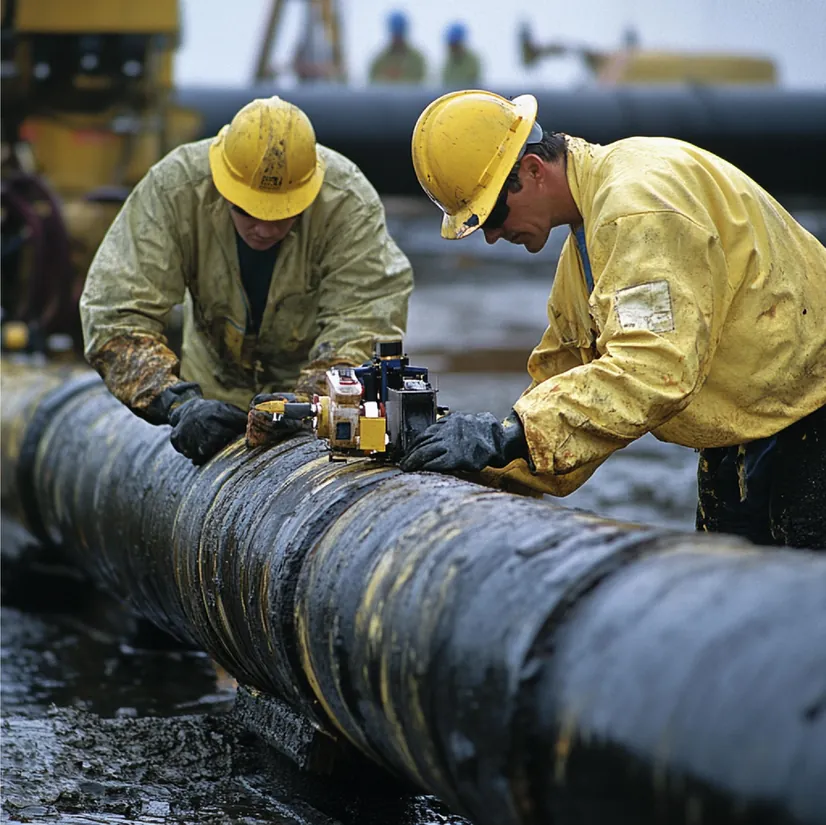
Petrochemical plants run on processes that leave little margin for error. Steam crackers, distillation columns, heat exchangers, and the vast network of pipelines connecting them all operate under conditions that accelerate wear in ways that are not always visible from the outside. Pipeline inspection, pressure vessel inspection, and storage tank inspection are not optional maintenance steps in this environment, they are the foundation on which safe, continuous operation rests. A crack in a weld, a deposit building inside a nozzle, or corrosion advancing along a pipe wall can each trigger consequences that ripple far beyond a single unit.
EVi Scopes develops video endoscopes and rigid borescopes that give inspection teams direct visual access to these critical areas without dismantling equipment or taking assets fully offline. The instruments are built for the confined, chemically aggressive spaces that petrochemical infrastructure presents: narrow pipe runs, pressurized vessel internals, and the interior surfaces of above ground storage tanks holding hydrocarbons or chemical intermediates. Where access is tight and the stakes are high, the quality of the image and the reliability of the tool determine how much useful information an inspector can actually extract. EVi Scopes addresses both, producing instruments designed to hold up across repeated inspection cycles in demanding industrial settings while returning the image clarity that meaningful defect assessment requires.
The physical conditions inside petrochemical equipment push inspection tools to their limits. Residual process chemicals coat internal surfaces, temperatures fluctuate between inspection cycles, and access points are often sized for process connections rather than inspection equipment. A borescope or video endoscope that performs reliably in a clean workshop environment may degrade quickly when exposed to hydrocarbon films, cleaning solvents, or the residual heat retained by thick-walled vessels. For pipeline inspection, the challenge compounds further: long horizontal runs, bends, and diameter changes all require a probe that maintains image quality and maneuverability simultaneously. EVi Scopes designs its instruments with these conditions in mind.
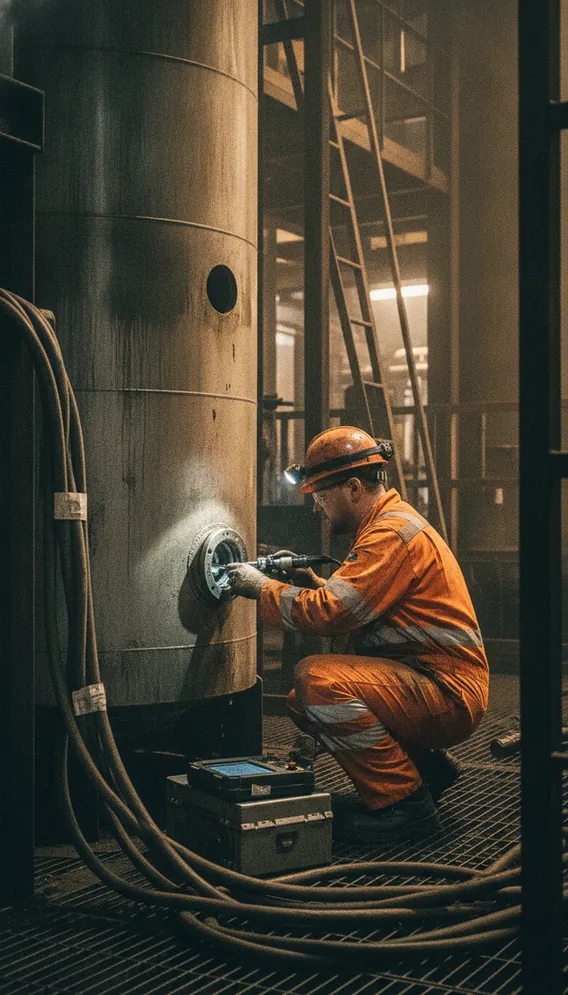
Above ground storage tank inspection introduces a different set of constraints. Internal floating roofs, structural stiffeners, and sump areas create geometry that standard rigid instruments cannot navigate without careful selection. Inspectors working inside tanks face time pressure from confined-space entry protocols, which makes every minute of productive visual access count. An instrument that produces ambiguous images forces re-entry, adding cost and exposure. Choosing the right tool before entering the space is as important as the inspection technique itself.


EVi Scopes offers video endoscopes across multiple diameter classes, rigid borescopes in the EVi BS and EVi SD series, and pipe inspection cameras in the EVi R series. Illumination options include white light, UV at 365 nm for fluorescent penetrant testing, and infrared variants. Custom configurations through the Series S address inspection geometries that standard catalogue instruments cannot reach. Together, these cover pressure vessel inspection, pipeline runs, heat exchanger tubes, and tank internals.
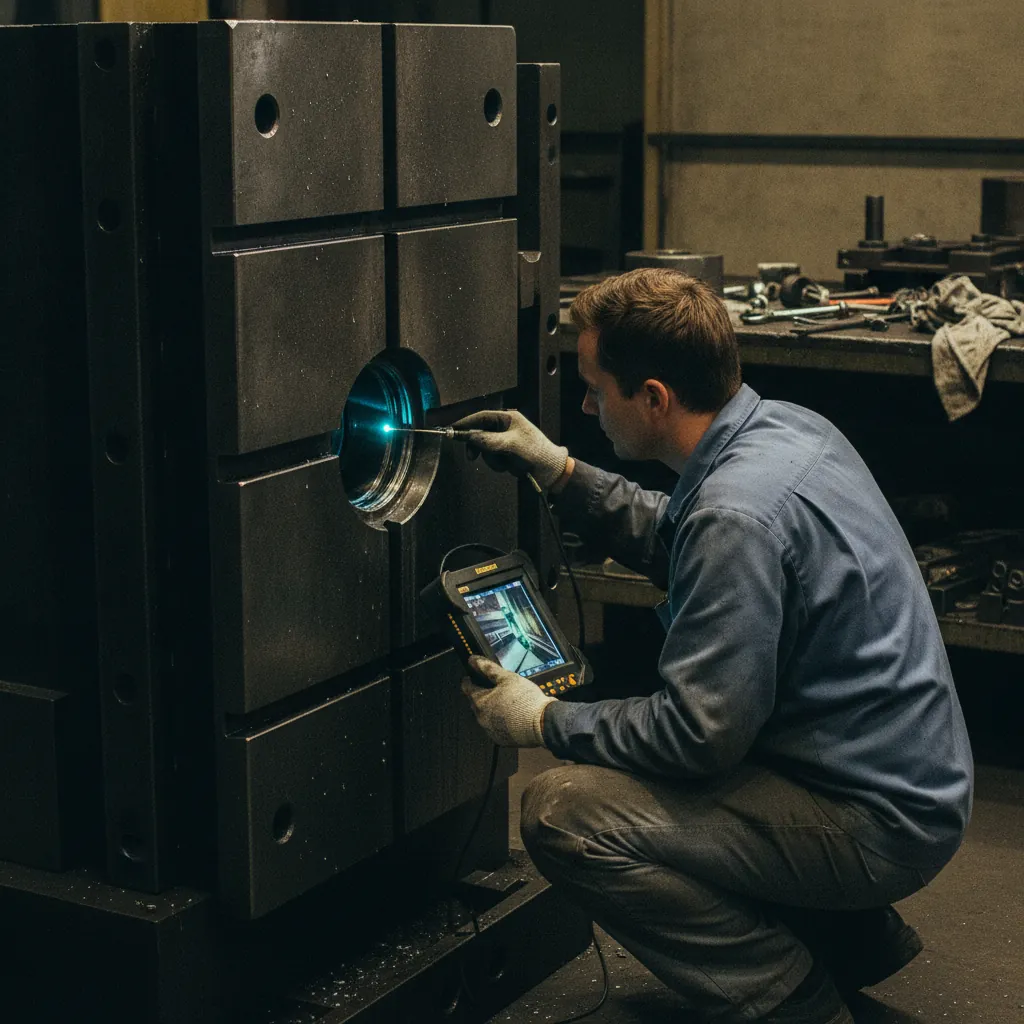
Image resolution determines whether an inspector can distinguish a surface scratch from a propagating crack, or a weld inclusion from a shadow artifact. EVi Scopes video endoscopes are built around this requirement, delivering image quality that supports confident defect characterization rather than inconclusive findings that require follow-up. The EVi 5, EVi 5.7, and EVi 6 series each offer different probe diameters, giving inspection teams the flexibility to match instrument diameter to access port size without sacrificing optical performance. Where a standard diameter fits the access point, image quality does not have to be traded away.
For pressure vessel inspection and weld assessment on storage tanks, fluorescent penetrant testing is a widely used surface-crack detection method. EVi Scopes instruments with UV illumination at 365 nm activate the penetrant directly through the endoscope, allowing the inspector to perform the technique in areas that would otherwise require a separate UV light source positioned externally. This matters in confined nozzle entries and heat exchanger tube sheets where external illumination simply cannot reach the inspection zone. The EVi 5 ZUV, EVi 5.7 ZT UV, and EVi 6 ZT UV variants are built specifically for this application, and the Series S accommodates custom probe geometries when standard diameters or lengths do not fit the access constraints of a specific vessel or tank configuration.
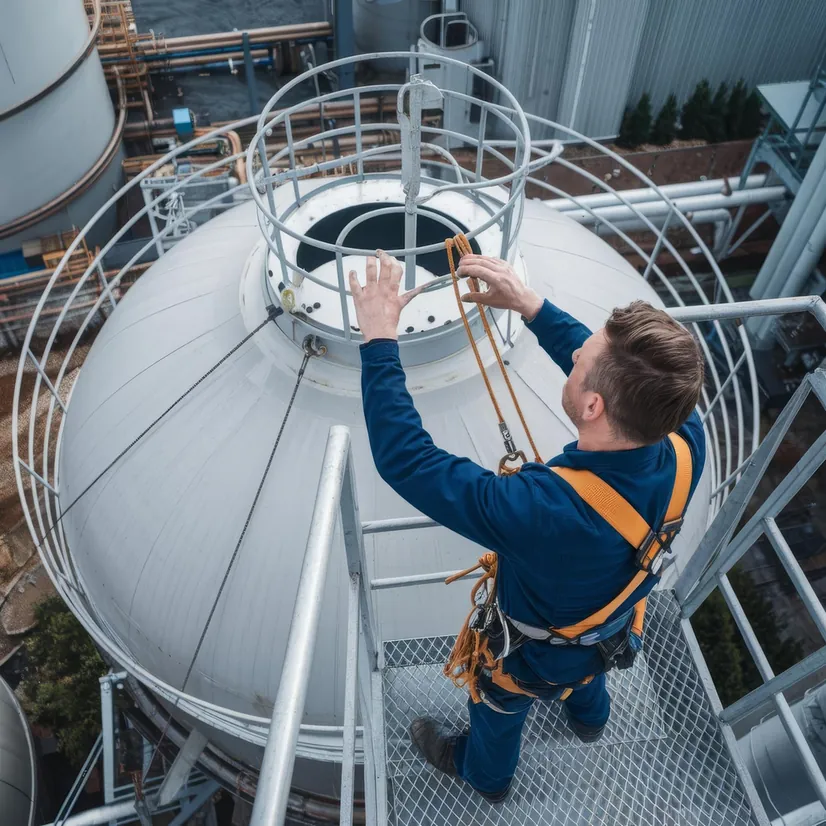
Petrochemical plants operate on inspection schedules driven by regulatory requirements, insurance conditions, and risk-based inspection frameworks. Above ground storage tank inspection typically follows standards that specify internal examination at defined intervals, with the interval length tied to corrosion rate data gathered during previous inspections. This creates a direct link between the quality of visual data collected in one inspection cycle and the interval permitted before the next. Sharper images and more complete surface coverage allow engineers to calculate corrosion allowances with greater confidence, which in turn supports longer run periods between mandatory shutdowns.
For heat exchangers and fired heaters, tube-by-tube inspection during turnarounds determines which bundles can remain in service and which require replacement. An EVi Scopes endoscope that reaches the full tube length and returns a clear image of the far-end surface gives the inspection team the data needed to make that call on the spot, rather than pulling tubes for laboratory examination. In pipeline inspection, early detection of internal corrosion or deposit buildup allows targeted intervention rather than section replacement, reducing both material cost and downtime. The instrument directly influences the economic decisions that follow.
Whether industrial endoscope, uv inspection light or camera system – we deliver what you need for your visual inspection. Tailored to your needs. Direct, robust, reliable. Get expert advice now. We help you select and properly apply your inspection technology.
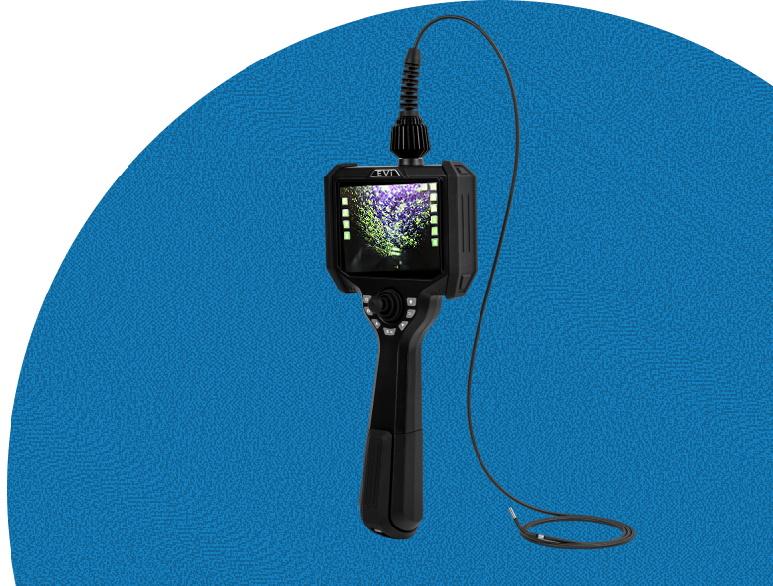
A practical inspection begins well before the probe enters the equipment. The inspector identifies the access points available, nozzles, manways, or drain connections, and selects the instrument diameter and length that fits the geometry. For tank inspection, this often means a flexible video endoscope long enough to reach the far wall from a single entry point, reducing the number of confined-space entries required. Once inside, the inspector advances the probe systematically, covering weld seams, nozzle connections, and floor plates in a defined sequence so that no area is skipped. EVi Scopes instruments capture still images and video throughout, building a documented record that supports both the inspection report and future comparison inspections. When UV illumination is active, the inspector can assess penetrant indications in real time and capture them as part of the same documentation run. For pipeline inspection, the EVi R series pipe cameras advance through the pipe run and return continuous video, flagging corrosion pits, deposits, or joint anomalies as the camera travels. At the end of the inspection, the documented findings go directly into the asset management system, giving engineers the evidence base they need to schedule repairs, adjust maintenance intervals, or clear the asset for continued service.
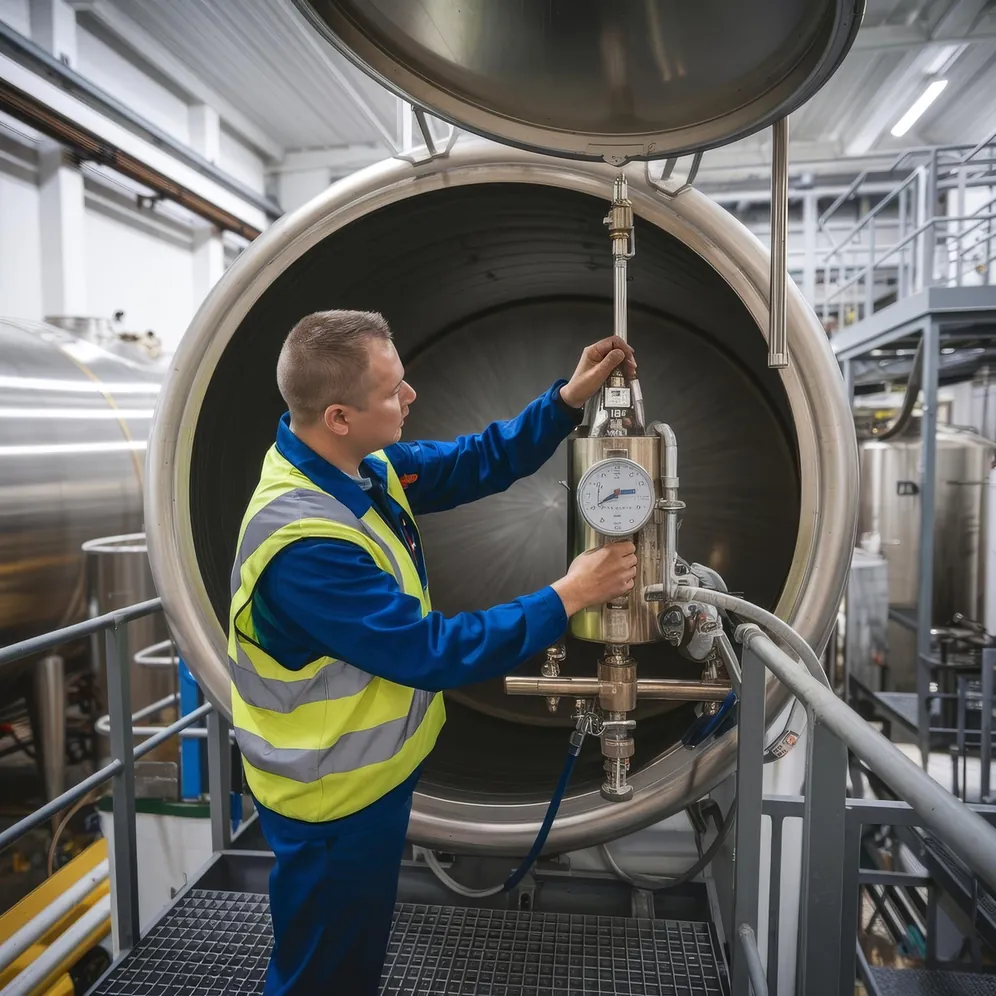
More than just a clear view
Especially with pressure vessel testing or machine maintenance: Those who see early what's changing can act in time.
No paper chaos, no follow-up submissions – results can be saved, traced and presented directly. Especially important for proof to authorities or customers.
In quality assurance, the difference between “looks good” and “is flawless” sometimes makes all the difference. Good images help with decision-making.
When multiple people inspect together – live or with saved images – decisions can be made faster and clearer. That saves time and nerves.
FAQ
Because many people are interested: Here you will find practical answers to frequently asked questions about our product portfolio and our services – explained in an understandable way, directly from practical experience.
Questions? We are happy to help.The EVi 5 and EVi 5.7 series offer probe diameters well suited to standard heat exchanger tube bores. Their length options allow full tube-length coverage from a single end, and the high-resolution imaging supports detection of pitting, erosion, and deposit buildup along the tube wall.
The UV variants, such as the EVi 5 ZUV and EVi 6 ZT UV, emit at 365 nm directly through the probe tip. This activates fluorescent penetrant already applied to the surface, allowing the inspector to see crack indications in real time without positioning a separate external UV source near the access point.
EVi Scopes instruments are built for industrial environments where surface contamination is routine. The probe tips and insertion tubes are designed to resist chemical exposure. For specific chemical compatibility questions related to your process media, the EVi Scopes team can advise on the appropriate variant before deployment.
Probe diameter selection depends on the pipe bore and the bend radius of the run. The EVi 5 series covers narrow access, while the EVi R pipe camera series handles longer pipeline runs with continuous video. Contact EVi Scopes with your pipe dimensions to confirm the correct match.
Above ground storage tank inspection typically involves larger internal volumes, floating roof structures, and floor plate assessment, requiring longer probe reach and systematic area coverage. Pressure vessel inspection focuses more on weld seams, nozzle connections, and internal surfaces under higher structural stress.
A flexible video endoscope with sufficient length can cover a large portion of a tank interior from one manway entry. Systematic probe advancement along walls, floor, and structural members reduces the need for multiple entries, cutting confined-space exposure time for the inspection team.
EVi Scopes instruments capture still images and continuous video throughout the inspection run. This output feeds directly into inspection reports and asset management records, providing a timestamped visual log that supports comparison with findings from previous inspection cycles.
Rigid borescopes from the EVi BS and EVi SD series suit straight, short access paths where a flexible probe offers no navigational advantage. They deliver high optical clarity in tube sheets, short nozzle entries, and machined bores where the geometry is predictable and the distance to the inspection surface is fixed.
Yes. The Series S covers custom probe configurations for non-standard access geometries. If your reactor, column, or vessel has an unusual nozzle size, bend angle, or length requirement, EVi Scopes engineers can develop a tailored instrument. Contact the team with your access point dimensions and inspection objective.
Clearer images allow inspectors to measure pit depth and surface area more accurately, which feeds directly into corrosion rate calculations. More reliable corrosion data supports longer inspection intervals under risk-based inspection frameworks, reducing the frequency of costly internal shutdowns.