



















Greater Safety in Ongoing Operations
Especially with pressure vessel testing or machine maintenance: Those who see early what's changing can act in time.

Confidential briefings, witness protection strategies, and undercover operation plans share one critical vulnerability: they can be intercepted if the spaces where they are discussed have been compromised. Technical Surveillance Countermeasures, commonly known as TSCM, address exactly that risk. A professional TSCM bug sweep systematically searches a location for covert listening devices, hidden cameras, GSM transmitters, and other unauthorized surveillance hardware that could expose sensitive information to hostile parties.
For police departments, private security firms, and corporate security teams, the stakes of a compromised environment are high. Leaked operational details can derail investigations, endanger personnel, or hand adversaries a decisive advantage. A TSCM sweep goes well beyond a visual check of a room. Trained specialists use radio frequency analyzers, non-linear junction detectors, and thermal imaging tools to identify both active and dormant devices that standard inspection would miss entirely. The process covers walls, furniture, fixtures, communication lines, and any equipment regularly brought into the space.
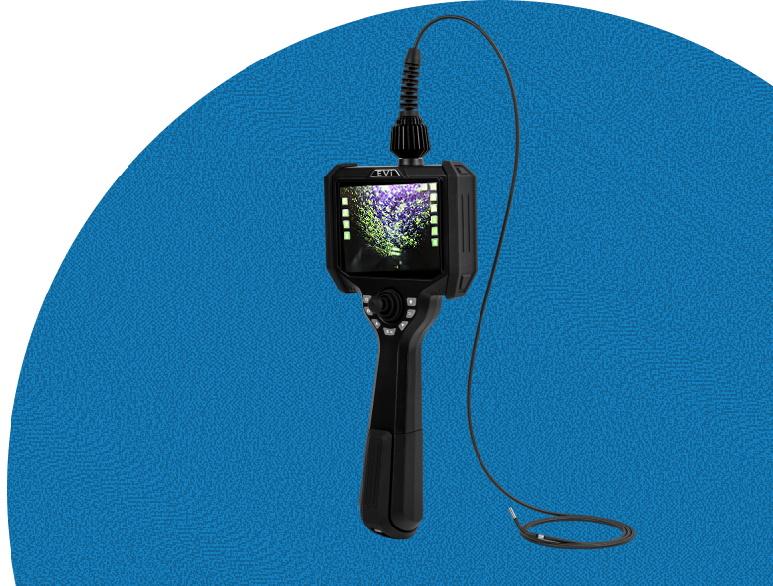
EVi Scopes supports security professionals with high-resolution optical inspection tools that complement the broader TSCM workflow. Where a sweep requires close examination of confined cavities, conduit runs, or installed hardware, video endoscopes from the EVi product range give operators a clear view without dismantling surfaces. That capability matters when thoroughness is non-negotiable and time in a sensitive location is limited.
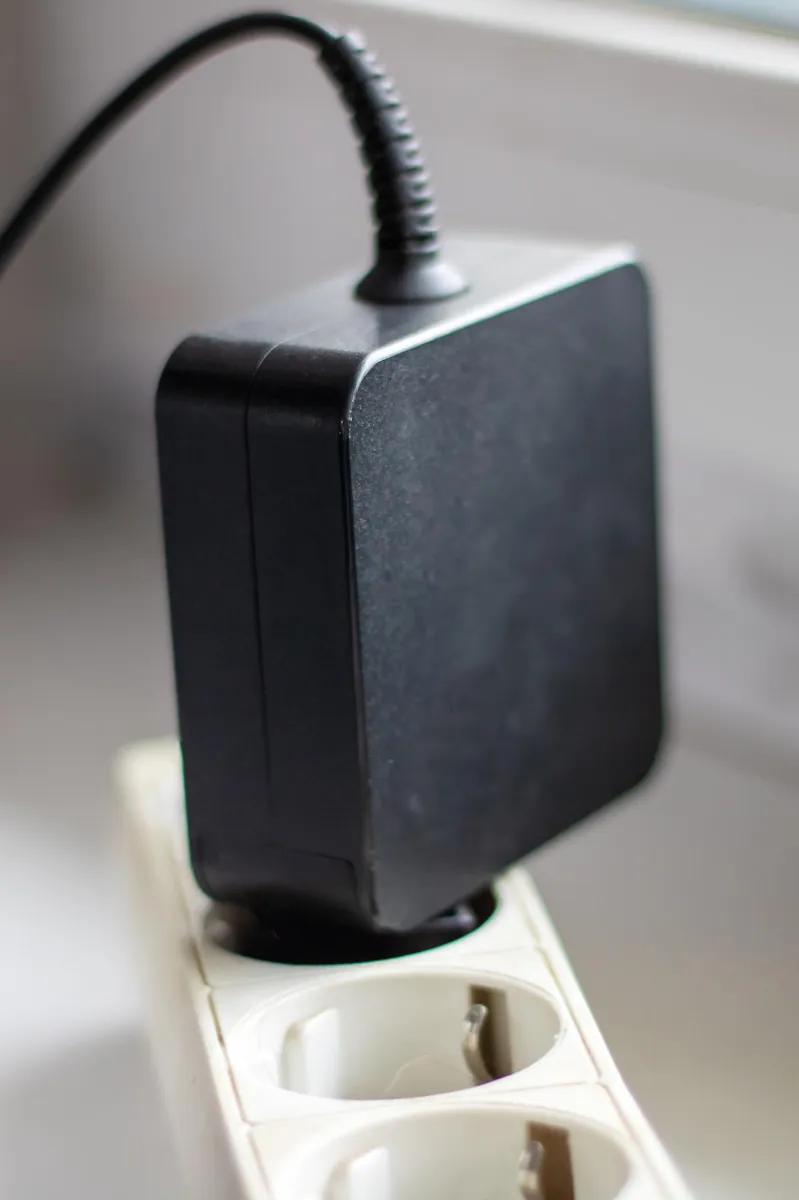
Covert surveillance technology has become smaller, cheaper, and easier to conceal than at any previous point. Devices can be embedded inside power sockets, smoke detectors, ventilation grilles, or everyday office equipment, making a cursory visual inspection almost useless. Security teams that rely on routine checks without dedicated TSCM services face a genuine blind spot, particularly in environments where the same spaces are used repeatedly for sensitive discussions over months or years.
Frequency-hopping transmitters and devices that only activate during conversations can evade basic RF scanners if the operator lacks the right equipment or the patience for a full-spectrum sweep. Physical access points such as suspended ceilings, cable ducts, and junction boxes are frequently overlooked because accessing them requires tools and time a standard security patrol simply cannot spare. Dormant devices that store audio locally rather than transmitting in real time produce no detectable signal during the sweep itself, adding another layer of difficulty. EVi Scopes addresses each of these gaps through a structured TSCM bug sweep process that closes them methodically.


An EVi Scopes TSCM sweep covers radio frequency analysis from low-band carrier signals up through microwave frequencies, physical inspection of wall cavities, ceiling voids, and fixed fixtures, telephone line testing for parallel connections or impedance anomalies, and a review of every electronic device present in the target area. Fibre-optic and rigid borescope tools let specialists examine conduit runs and cavity interiors without opening walls, producing verifiable photographic evidence before any remediation decision is taken.
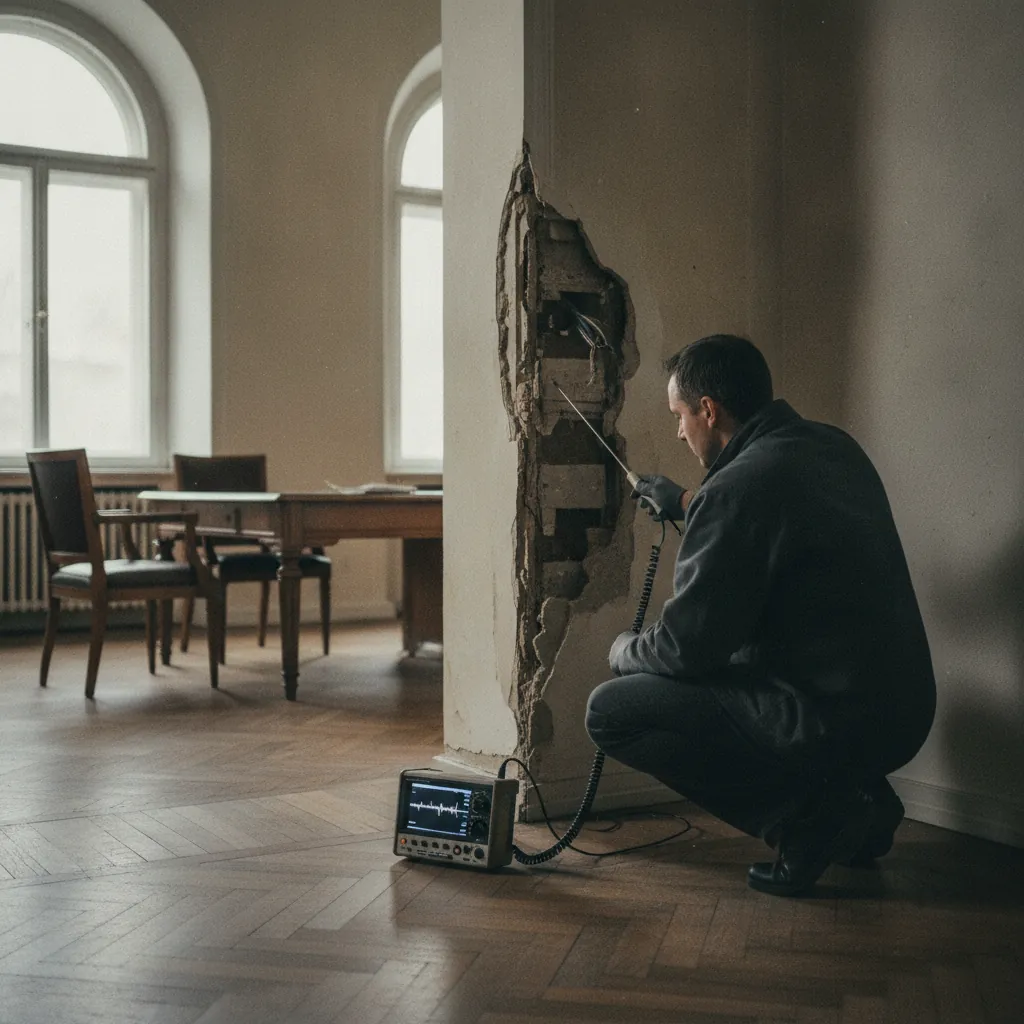
Radio frequency detection and non-linear junction detectors are the backbone of any serious TSCM sweep, but they cannot tell you what is physically sitting inside a sealed cavity or behind a fitted panel. That is where video endoscopes become operationally significant. By inserting a slim probe through a small access point, a specialist can inspect the interior of a wall, a cable tray, or a hollow fixture and capture high-resolution footage of anything concealed there. The evidence is visual, recordable, and unambiguous, which matters when a security report needs to stand up to scrutiny.
EVi Scopes designs its video endoscope range with the kind of image quality and probe flexibility that demanding inspection work requires. The EVi 8.0 series handles confined spaces where articulation and resolution both matter. Models with UV illumination at 365 nm can reveal adhesive residue or disturbed surfaces that indicate a device has been recently installed or removed, adding a forensic dimension to the sweep. For security teams that need to inspect communication infrastructure, junction boxes, or installed AV equipment without causing damage, the non-destructive nature of endoscopic inspection preserves the integrity of the space and keeps the sweep discreet. Custom configurations through the Series S address access geometries that standard probes cannot reach.

Experienced TSCM practitioners treat sweep scheduling as a risk management decision rather than a one-time event. A space that was clean several months ago is not necessarily clean today, particularly if contractors, cleaning crews, or unfamiliar visitors have had access in the interim. High-value targets such as boardrooms, interview suites, and operations centers warrant periodic sweeps, with the interval determined by the sensitivity of the activity and the volume of external access the space receives. Device placement follows predictable logic: installers favor locations that offer both concealment and reliable audio capture, which means soft furnishings near conference tables, power infrastructure, and ceiling voids above primary seating positions are consistently high-priority inspection zones. Understanding that logic allows a sweep team to allocate time efficiently rather than treating every square meter of a room identically. Communication lines deserve particular attention because hardwired interception requires no battery and produces no RF signature, making it invisible to spectrum analysis alone. EVi Scopes integrates line testing alongside physical and electronic inspection in every TSCM bug sweep, precisely because no single method catches every threat vector.
Whether industrial endoscope, uv inspection light or camera system – we deliver what you need for your visual inspection. Tailored to your needs. Direct, robust, reliable. Get expert advice now. We help you select and properly apply your inspection technology.
A well-structured TSCM sweep begins before the EVi Scopes team enters the target space. Specialists review the floor plan, identify all communication infrastructure, and establish which areas carry the highest sensitivity based on how the space is used. On arrival, the team conducts an initial RF survey to capture the ambient signal environment, creating a baseline against which anomalies can be measured. Physical inspection follows a systematic path from the perimeter inward, with particular attention to recently disturbed surfaces, non-original fixtures, and any hardware that does not match the building's documented inventory. Optical inspection tools enter the workflow wherever a cavity, conduit, or sealed unit requires internal verification. Once the physical sweep concludes, communication lines undergo dedicated testing using time-domain reflectometry and other line analysis methods that detect passive taps and unauthorized connections. The entire process is documented with photographs and, where video endoscopes are used, recorded footage that provides an auditable record of what was inspected and what was found. The final report gives the commissioning authority a clear picture of the space's status and, where necessary, specific recommendations for remediation or follow-up action.

More than just a clear view
Especially with pressure vessel testing or machine maintenance: Those who see early what's changing can act in time.
No paper chaos, no follow-up submissions – results can be saved, traced and presented directly. Especially important for proof to authorities or customers.
In quality assurance, the difference between “looks good” and “is flawless” sometimes makes all the difference. Good images help with decision-making.
When multiple people inspect together – live or with saved images – decisions can be made faster and clearer. That saves time and nerves.
FAQ
Because many people are interested: Here you will find practical answers to frequently asked questions about our product portfolio and our services – explained in an understandable way, directly from practical experience.
Questions? We are happy to help.A standard security inspection checks access control, personnel, and visible physical security. A TSCM sweep specifically targets covert electronic surveillance devices using RF analyzers, non-linear junction detectors, and line testing equipment that standard security patrols do not carry.
Duration depends on the size and complexity of the space. A single conference room may take several hours, while a multi-room facility with extensive communication infrastructure can require a full day or more. Thoroughness takes priority over speed in professional TSCM work.
Boardrooms, executive offices, interview suites, operations centers, and any space used for sensitive negotiations or briefings carry the highest risk. Spaces with frequent external contractor access also warrant priority attention because installation opportunities are harder to control.
Dormant devices that store audio locally produce no RF signal, so spectrum analysis alone cannot detect them. Non-linear junction detectors identify electronic components regardless of whether a device is active, and physical inspection with optical tools provides visual confirmation inside cavities.
Video endoscopes allow specialists to inspect the interior of wall cavities, cable ducts, junction boxes, and sealed fixtures without causing damage. The recorded footage creates an auditable visual record of what was examined and provides clear evidence of any concealed hardware found.
Risk level and access patterns determine the interval. Spaces used for high-sensitivity discussions with regular external access typically warrant quarterly sweeps. After significant events such as renovations, staff changes, or known security incidents, an unscheduled sweep is advisable regardless of the regular cycle.
Yes. Hardwired interception on telephone and data lines produces no RF signature, so line testing is a mandatory part of any complete TSCM service. Time-domain reflectometry and dedicated line analyzers detect passive taps and unauthorized connections that RF scanning would miss entirely.
The sweep team documents the device's location, type, and condition, then secures it without activation if possible. The commissioning authority is notified immediately, and the team advises on whether law enforcement involvement is appropriate before any further action is taken.
Experienced TSCM teams use low-profile equipment and coordinate entry to minimize visible activity. Sweeps are often scheduled outside normal working hours precisely to avoid drawing attention. Discretion is a standard operational requirement, not an optional extra, for professional TSCM providers.
Look for verifiable experience in electronic countermeasures, familiarity with current detection equipment, and a structured reporting process. In regulated markets such as the UK, relevant SIA licensing or recognized industry certifications provide an additional baseline for assessing a provider's credibility.