
















Greater Safety in Ongoing Operations
Especially with pressure vessel testing or machine maintenance: Those who see early what's changing can act in time.

Rail infrastructure carries enormous loads day after day, and the consequences of an undetected defect can be severe. Rail track inspection sits at the heart of any credible maintenance program, yet the physical conditions that inspectors face make it genuinely demanding work. Track geometry shifts under repeated axle loads, welds develop subsurface cracks invisible to the naked eye, and bridge structures accumulate corrosion in recesses that standard visual checks simply cannot reach.
Across global networks, from the dense passenger corridors of Europe to the long-haul freight routes of North America, the inspection challenge is the same in principle: get a reliable image of what is happening inside or behind a structure without taking it out of service. Endoscopic camera systems have become a practical answer to that challenge. A slender probe inserted through an access port reveals the internal condition of a hollow rail section, a weld root, or a bridge bearing cavity in real time, with still images and video captured for documentation. That documentation matters as much as the inspection itself, because maintenance decisions, regulatory sign-offs, and warranty claims all depend on traceable visual evidence. EVi Scopes designs equipment specifically for these field conditions, so understanding what the right tool does in a rail context is the first step toward building an inspection workflow that holds up under scrutiny.
Rail maintenance teams routinely work in conditions that push standard inspection tools to their limits. Track corridors are narrow, lighting is poor, and the inspection window between train movements is often measured in minutes rather than hours. Railway track inspection of weld joints is a particular pressure point: thermite and flash-butt welds must be assessed at the root and crown, yet those surfaces sit flush with the rail profile and offer no natural access for a conventional camera. Inspectors either accept a surface-only view or invest in equipment that can reach into the geometry.
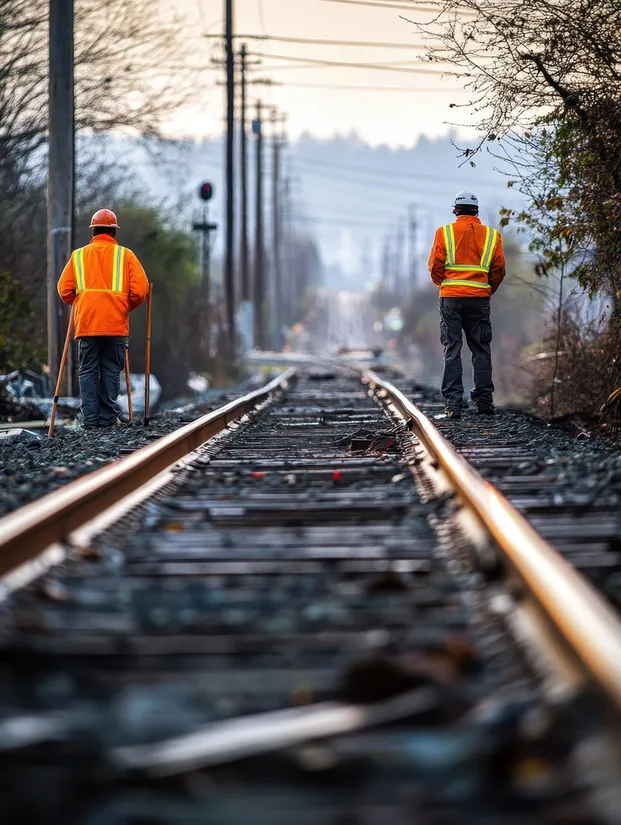
Railroad bridge inspection compounds the access problem further. Steel box girders, concrete deck soffits, and bearing pockets all contain spaces where moisture collects and corrosion progresses out of sight. A compact video endoscope inserted through a drainage hole or inspection port can map the internal condition of a girder cavity without scaffolding or lane closure. The same logic applies to tunnel lining inspection, where crack propagation behind a surface finish is otherwise impossible to assess without destructive investigation. Getting a clear image from a confined, poorly lit space is the central technical problem that EVi Scopes camera systems are built to solve.


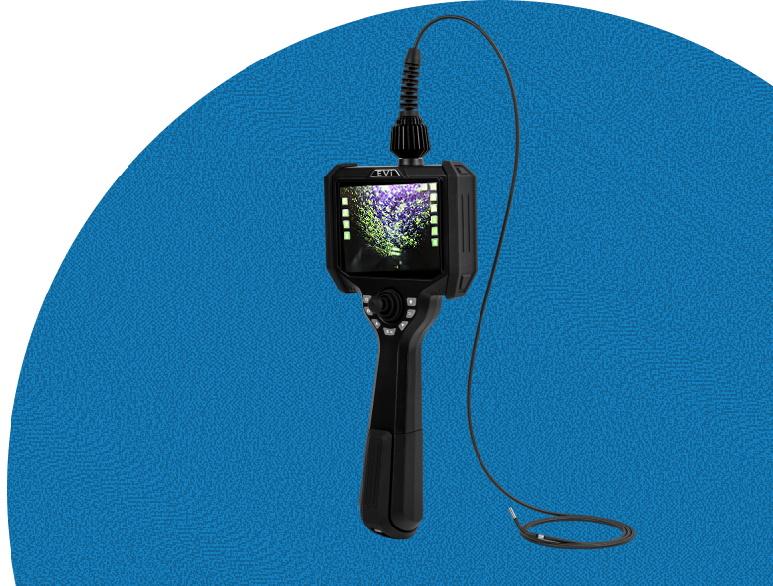
EVi Scopes builds video endoscopes, rigid borescopes, and pipe cameras suited to the access geometries found across rail infrastructure. The EVi 5, EVi 5.7, and EVi 6 series handle articulated probe work in tight cavities, while the EVi BS rigid borescope line covers straight-line paths with high optical clarity. For rail maintenance teams that need to document findings systematically, each system captures still images and video directly to storage for immediate reporting.
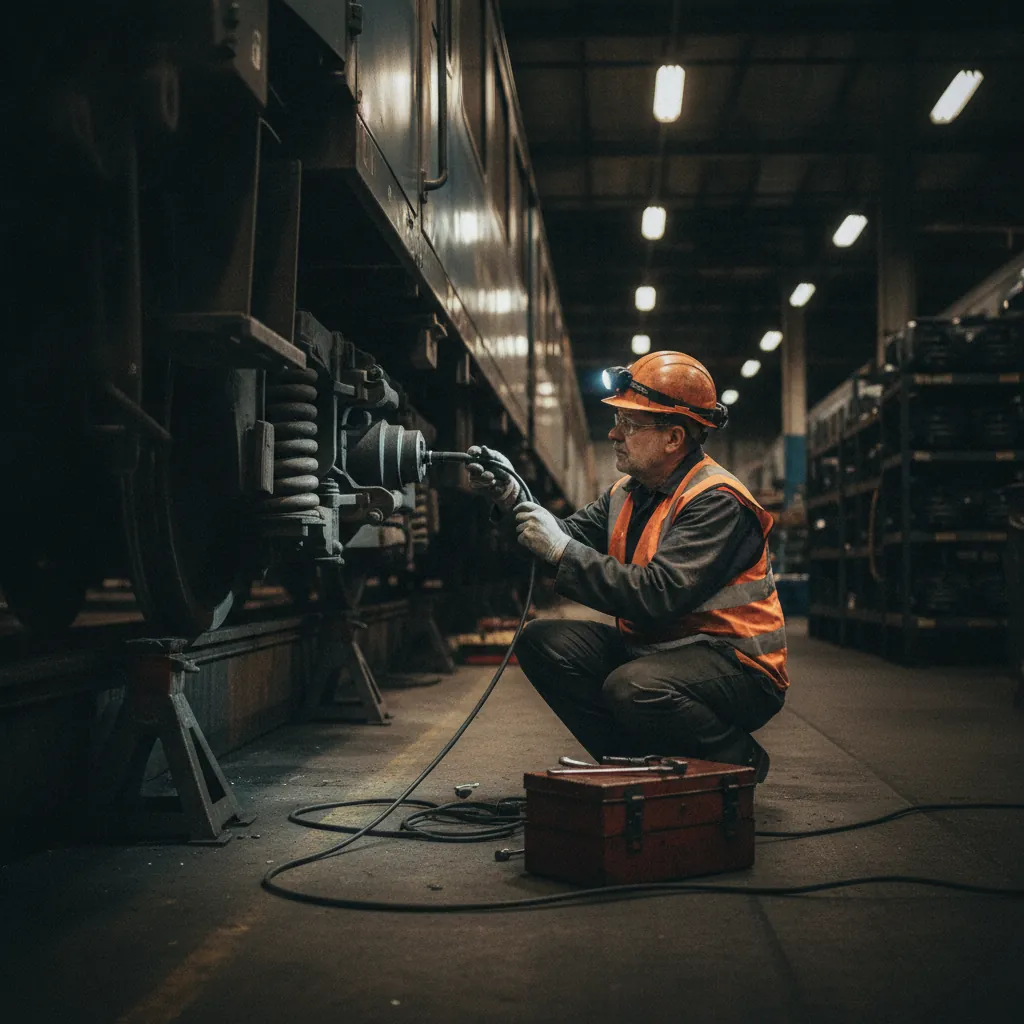
A camera system chosen for rail work has to perform under conditions that consumer or general-purpose optics are not designed for. Vibration, dust, metal swarf, and temperature swings between outdoor track and enclosed bearing housings all affect image quality and hardware longevity. EVi Scopes designs its video endoscope series with these operating realities in mind. The articulated tip on the EVi 6 series, for example, gives the operator directional control inside a hollow section or girder cavity, so the probe can be steered toward a suspect area rather than relying on a fixed field of view. That steering capability shortens inspection time and reduces the chance of missing a defect that sits just off the central axis of the access port.
Lighting is not a detail to leave to chance in weld inspection. White-light illumination resolves surface geometry and discoloration clearly, which is the starting point for most assessments. Where fluorescent penetrant testing is part of the workflow, UV illumination at 365 nm activates the penetrant and makes crack indications visible against a dark background, even in a confined weld root that a handheld UV lamp could never reach. EVi Scopes offers UV-capable variants across its EVi 5, EVi 5.7, and EVi 6 series, so the same probe that performs a white-light survey can switch to UV mode for a penetrant check without withdrawing and reinserting a different tool. That flexibility reduces setup time during a short track possession window, which is a practical advantage that compounds across a full inspection campaign.

Rail authorities in most jurisdictions operate a defect classification system that ties inspection findings directly to permitted operating speed and load limits. A crack indication found during a railway track inspection does not automatically trigger a line closure; instead, it is assigned a severity category that determines the re-inspection interval and any temporary speed restriction. That classification depends entirely on the quality of the visual evidence captured at the time of discovery. A blurred or poorly lit image may force a conservative decision, because the assessor cannot distinguish a surface scratch from a propagating fatigue crack. High-resolution documentation from a calibrated endoscope gives the engineering team enough detail to make a proportionate call. The same principle applies to bridge assessments: a corrosion patch photographed in full color with a measurable reference scale carries far more weight in a structural report than a written description alone. EVi Scopes endoscopes are built around this requirement, treating camera resolution as a maintenance decision tool rather than a specification footnote. Predictive maintenance platforms and digital asset records are accelerating the shift toward image-based evidence, making optical quality a direct factor in how efficiently a network allocates its maintenance budget.
Whether industrial endoscope, uv inspection light or camera system – we deliver what you need for your visual inspection. Tailored to your needs. Direct, robust, reliable. Get expert advice now. We help you select and properly apply your inspection technology.
A structured approach to rail track inspection with an endoscope follows a repeatable sequence that keeps findings traceable. Before the probe enters the access point, the operator confirms the target area, selects the appropriate probe diameter and length, and sets the illumination mode to match the inspection objective. For a weld root check, that typically means starting with white light to assess geometry and surface condition, then switching to UV if penetrant has been applied. Once inside, the operator steers the articulated tip toward the area of interest and captures a reference image at a fixed focal distance before moving to close-up documentation of any indication. Each image file is timestamped and tagged with the asset identifier, so the resulting report links directly to the physical location on the network.
After withdrawal, the probe is cleaned according to the site contamination protocol, and the image set is transferred to the maintenance management system. That transfer connects the field finding to the engineering decision. EVi Scopes systems support direct export to common file formats, keeping that final step straightforward regardless of which asset management platform the operator uses.

More than just a clear view
Especially with pressure vessel testing or machine maintenance: Those who see early what's changing can act in time.
No paper chaos, no follow-up submissions – results can be saved, traced and presented directly. Especially important for proof to authorities or customers.
In quality assurance, the difference between “looks good” and “is flawless” sometimes makes all the difference. Good images help with decision-making.
When multiple people inspect together – live or with saved images – decisions can be made faster and clearer. That saves time and nerves.
FAQ
Because many people are interested: Here you will find practical answers to frequently asked questions about our product portfolio and our services – explained in an understandable way, directly from practical experience.
Questions? We are happy to help.Probe selection depends on the access port diameter at the specific asset. EVi Scopes offers multiple diameters across the EVi 5, EVi 5.7, and EVi 6 series, so the right fit is matched to the geometry rather than forcing a compromise that limits image quality or maneuverability inside the cavity.
White light reveals surface geometry and discoloration. UV illumination at 365 nm activates fluorescent penetrant applied to the weld, making subsurface crack indications glow visibly against a dark background. Using both modes in sequence on the same probe gives a more complete picture than either method alone.
Yes. EVi Scopes video endoscopes are handheld and battery-capable, requiring no fixed power supply or lengthy calibration before use. An operator can begin imaging within minutes of arriving at the access point, which suits the short possession windows typical of busy passenger and freight corridors.
EVi Scopes systems export still images and video to standard file formats compatible with common asset management and maintenance reporting platforms. Timestamped files include the capture date and can be tagged with asset identifiers before transfer, keeping the documentation chain intact from field to office.
The articulated tip steers the probe toward suspect areas inside a girder cavity rather than relying on a fixed forward view. This directional control lets the operator follow a corrosion line or weld seam along its full length, reducing the risk of missing a defect that sits off the central axis of the access port.
Several EVi Scopes models are suited to both tasks. The EVi R series pipe cameras handle drainage and conduit runs, while the articulated EVi 5, 5.7, and 6 series address confined structural cavities. Selecting the right model depends on the internal diameter and bend radius of the target passage.
The EVi 5 series covers smaller diameter access paths with a compact probe profile. The EVi 6 series offers a larger probe with enhanced articulation range and is better suited to wider cavities such as bridge bearing pockets or large hollow sections where greater tip deflection adds meaningful coverage.
Regulatory sign-off typically requires timestamped images linked to a specific asset location, a description of the indication, and a severity classification. EVi Scopes systems capture and export this data directly, so the inspection record is complete and traceable without manual transcription between field notes and the formal report.
A rigid borescope suits straight-line access paths where no steering is needed, such as a cylindrical bore or a straight drainage channel. When the target area requires the probe to navigate around an internal feature or reach a corner, an articulated video endoscope gives the operator the directional control a rigid instrument cannot provide.
Endoscopic inspection generates the high-resolution image records that feed predictive maintenance platforms. By documenting defect progression at regular intervals, engineering teams can track crack growth rates or corrosion spread over time, shifting from reactive repairs to scheduled interventions before a defect reaches a critical threshold.