
















Greater Safety in Ongoing Operations
Especially with pressure vessel testing or machine maintenance: Those who see early what's changing can act in time.

When a structure collapses or a disaster strikes a confined area, the ability to see inside without disturbing unstable debris can determine whether a survivor is found in time. Search and rescue teams face exactly this challenge: gaining visual access to voids, collapsed ceilings, and narrow passages where no human hand can safely reach. Endoscopic camera systems have become a practical answer to that problem, giving responders a real-time view through gaps as small as a few millimeters.
EVi Scopes designs video endoscopes and borescopes that translate directly into field-ready tools for emergency management professionals. The EVi product lines cover a range of probe diameters and lengths, so a team can select the configuration that matches the access point in front of them, whether that is a fractured wall cavity, a buried pipe section, or a collapsed floor void. Articulating probe tips allow the camera to navigate corners without repositioning the entire instrument. High-resolution imaging, combined with the option for UV illumination at 365 nm, means responders can detect not only physical obstructions but also biological traces that standard white light would miss. For units integrating visual inspection into search and rescue training programmes, the recorded footage also serves as a debrief and documentation tool, building institutional knowledge across exercises and real deployments alike.
Rescue teams operating after structural collapses, floods, or industrial accidents share a common frustration: the exact location where a survivor may be trapped is often the one place no person can safely enter. Probing with rods or listening devices gives partial information, but a live camera image tells responders whether a void is occupied, how large it is, and which direction offers the safest extraction path. Without that visual confirmation, teams risk committing resources to the wrong access point or destabilising debris during an approach.
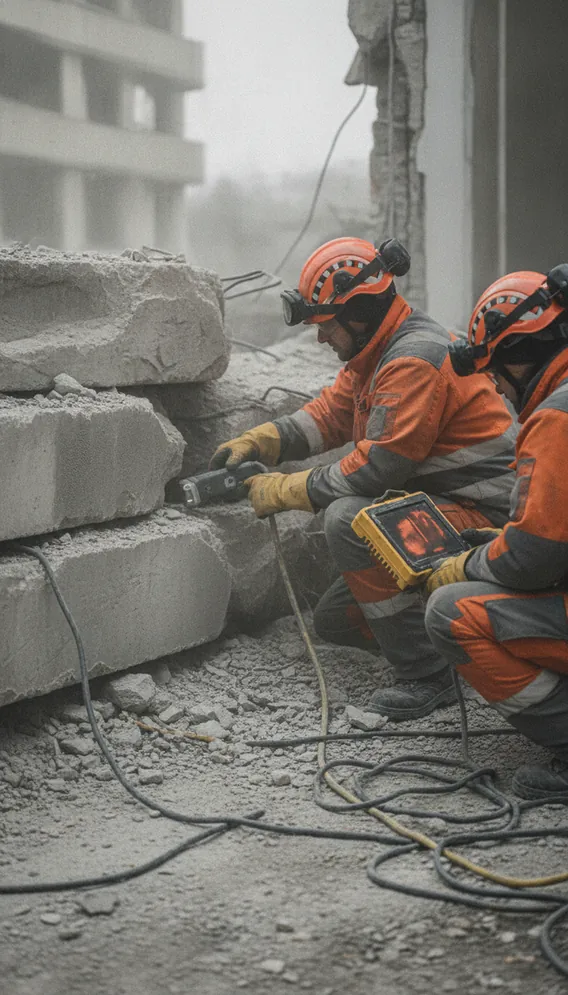
Disaster preparedness planning increasingly recognises that optical access tools belong alongside cutting equipment and medical kits in a unit's standard loadout. The challenge is matching the right probe to the access geometry. A narrow gap between concrete slabs demands a different solution than a flooded drainage channel, where a waterproof camera on a semi-rigid insertion tube is required. Probe articulation, sensor resolution, and cable length all affect whether the operator gets a usable picture. EVi Scopes designs systems that handle the full range of field conditions, so the right tool reaches the right void rather than staying in the vehicle.


EVi Scopes supplies video endoscopes, rigid borescopes, pipe cameras, and telescoping camera arms across multiple probe diameters and insertion lengths. Each product line addresses a specific access geometry, from the narrow EVi 5 series to the wider-channel EVi 8.0, with UV, white-light, and infrared illumination variants available. Custom configurations under the Series S let units with non-standard requirements specify probe length, articulation range, and sensor type for their exact operational context.
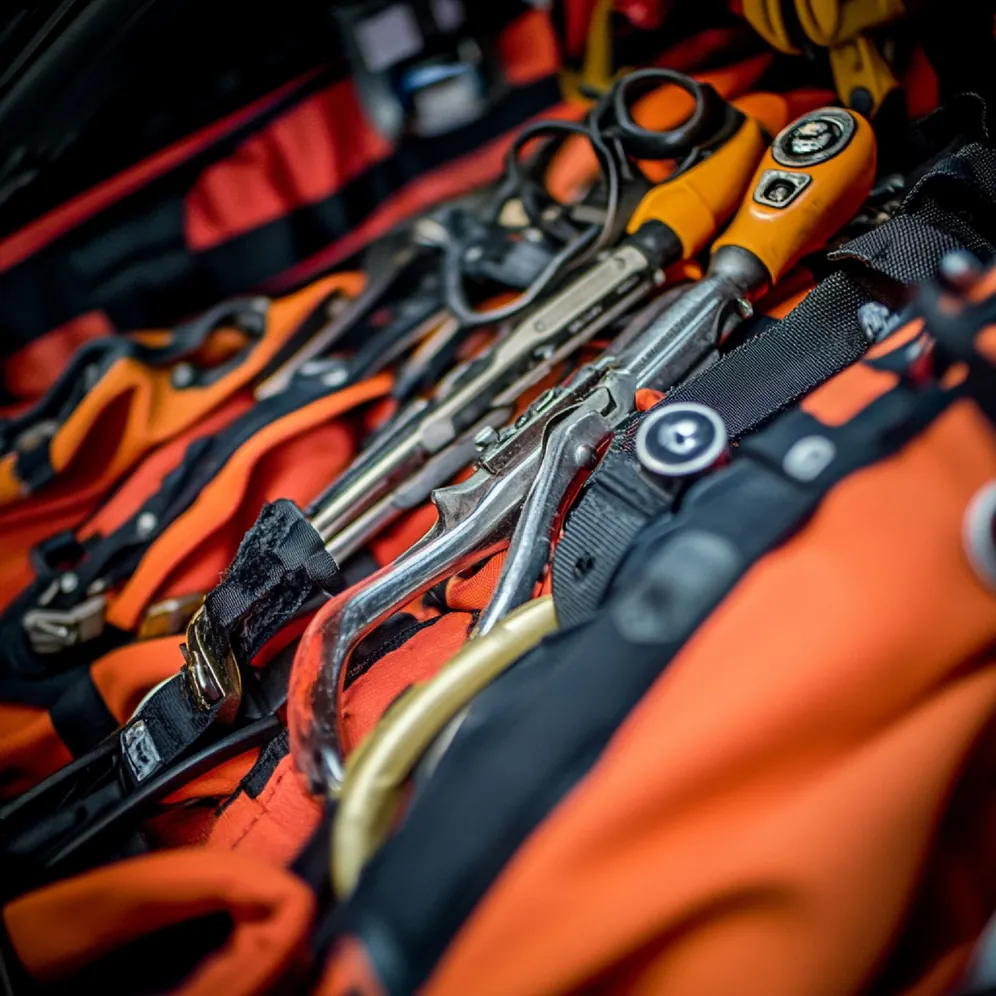
Consumer-grade cameras and improvised inspection tools share a common weakness in rescue environments: they are built for controlled conditions. Dust from pulverised concrete, water ingress from firefighting or flooding, and the physical stress of being pushed through irregular debris channels will degrade or destroy equipment not designed for those loads. EVi Scopes builds its probe series to handle exactly those conditions, with sealed housings and robust insertion cables that maintain image quality when the environment is at its worst.
Beyond physical durability, illumination technology shapes the quality of information a camera delivers. White-light imaging shows structural geometry clearly, which is the first priority when mapping a void. Infrared variants detect heat signatures, useful when searching for a survivor whose position is obscured by debris. UV illumination at 365 nm activates fluorescent traces, a capability that extends the camera's role into hazmat assessment alongside active rescue work. Having all three options within one product family means a unit can carry a single platform and switch illumination mode as the situation develops, rather than maintaining separate tools for each scenario. For emergency management planners building equipment lists, that consolidation reduces both procurement complexity and the training burden on personnel who must become proficient with each device.
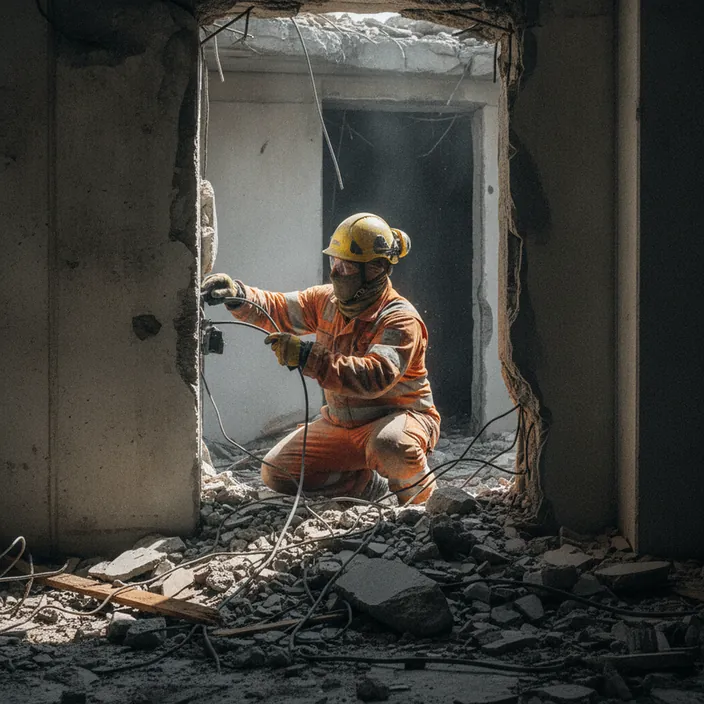
Practitioners who have used optical inspection tools across multiple incident types develop a clear sense of where generic equipment falls short. Probe diameter is the most immediate constraint: a 6 mm camera fits access points that a 10 mm unit cannot enter, and that difference is often the margin between a confirmed sighting and a blind search. Equally important is insertion tube stiffness. A semi-rigid cable holds its shape when pushed through a horizontal void but becomes unmanageable in a vertical drop where a fully flexible cable with a steerable tip is needed instead. Articulation range at the probe tip determines whether the operator can look around a corner or only straight ahead, which directly affects how much of a void can be surveyed from a single insertion point.
Recording capability matters too, because footage captured during a live rescue informs the extraction plan and afterward contributes to after-action reviews that improve future search and rescue training outcomes. EVi Scopes designs its cameras with this dual purpose in mind: each unit functions as both a search aid and a documentation tool. Teams that adopt this approach extract significantly more operational value from the same piece of equipment.
Whether industrial endoscope, uv inspection light or camera system – we deliver what you need for your visual inspection. Tailored to your needs. Direct, robust, reliable. Get expert advice now. We help you select and properly apply your inspection technology.
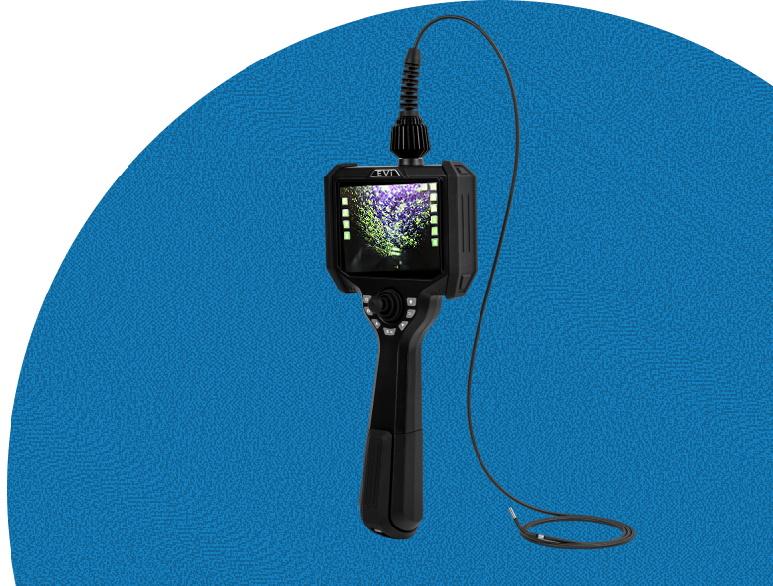
Getting the right instrument into a rescue team's hands starts with understanding the access geometries that unit encounters most often. EVi Scopes works through a consultation process where the specific operational context, typical incident types, probe insertion distances, and environmental exposure shape which product series and configuration fits best. From that starting point, probe diameter, insertion tube length, illumination mode, and display arrangement are selected. Standard series models suit units whose requirements fall within established parameters, while the Series S custom path accommodates non-standard specifications. Once equipment arrives, the physical learning curve for trained responders is short: the probe inserts, the image appears on the display, and articulation is controlled through a straightforward handle mechanism. The platform supports ten languages including Arabic, Chinese, and Japanese, which matters for multinational training exercises where interface clarity across language groups affects how quickly personnel become operationally confident. Recorded footage exports directly for after-action analysis, so the camera builds institutional knowledge from the first deployment onward. Units that want to evaluate a configuration before committing can reach EVi Scopes through the website or by phone.
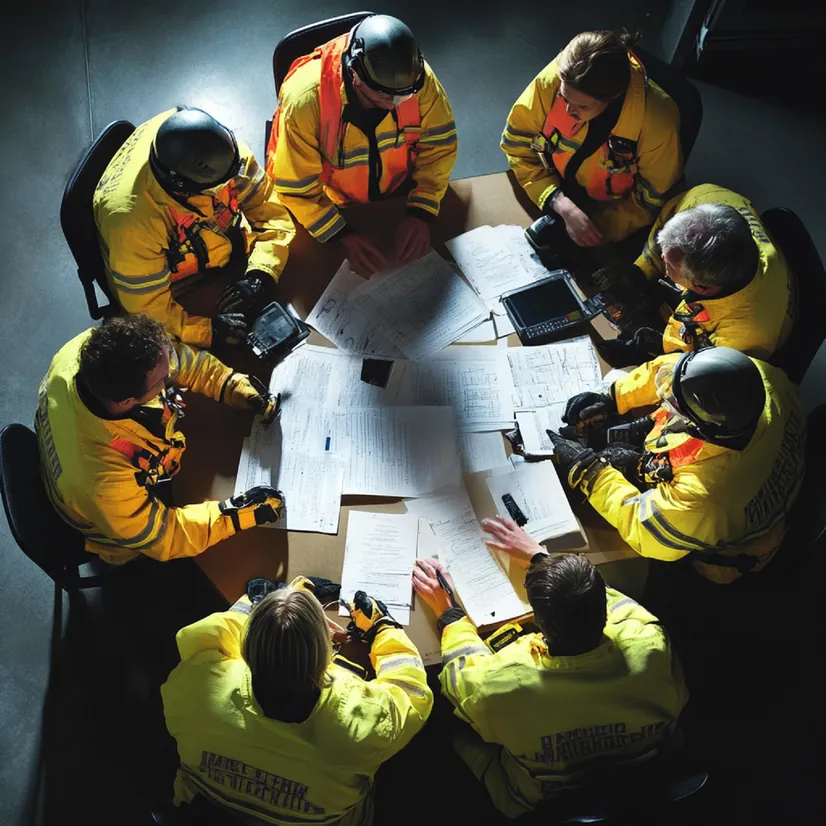
More than just a clear view
Especially with pressure vessel testing or machine maintenance: Those who see early what's changing can act in time.
No paper chaos, no follow-up submissions – results can be saved, traced and presented directly. Especially important for proof to authorities or customers.
In quality assurance, the difference between “looks good” and “is flawless” sometimes makes all the difference. Good images help with decision-making.
When multiple people inspect together – live or with saved images – decisions can be made faster and clearer. That saves time and nerves.
FAQ
Because many people are interested: Here you will find practical answers to frequently asked questions about our product portfolio and our services – explained in an understandable way, directly from practical experience.
Questions? We are happy to help.For most collapsed-structure voids, the EVi 5 series at 5 mm diameter enters the narrowest gaps while still delivering high-resolution imagery. Wider channels suit the EVi 6 or EVi 8.0. The right choice depends on the typical gap width your unit encounters most frequently on site.
Yes. EVi Scopes video endoscopes capture still images and video that export for debrief and documentation purposes. Rescue teams use this footage in after-action reviews to analyse probe paths, void geometry, and decision points, building a record that improves future search and rescue training outcomes.
UV illumination at 365 nm activates fluorescent biological and chemical traces that white light does not reveal. During a rescue, this helps identify biological indicators of a survivor's presence or flag hazardous substances in a confined space before personnel commit to an entry approach.
The Series S process starts with a technical consultation covering probe diameter, insertion length, articulation range, illumination mode, and environmental exposure requirements. EVi Scopes then produces a configuration matched to those specifications. Contact the team directly by phone or email to open that conversation.
EVi Scopes probe housings and insertion cables are sealed against water and particulate ingress. For flood rescue scenarios, confirm the specific ingress protection rating of your chosen model with the EVi Scopes team, as ratings vary across the product series depending on configuration.
Trained responders typically reach operational confidence quickly because the interface is direct: insert the probe, read the display, steer with the handle. Most rescue professionals with prior equipment training can work through the basic functions within a single hands-on session during search and rescue training exercises.
The EVi 5.7 and EVi 6 series with semi-rigid insertion tubes handle extended horizontal insertions well, maintaining probe position without buckling. For very long runs, the EVi R pipe camera series is designed specifically for sustained linear insertions into channels and conduits.
Yes. White-light imaging maps structural geometry, infrared detects heat signatures, and UV illumination identifies fluorescent traces for hazmat assessment. All three illumination modes exist within the EVi Scopes product family, so a unit can address multiple operational needs with one platform rather than separate tools.
EVi Scopes operates across multiple languages including English, German, French, Spanish, Italian, Turkish, Arabic, Chinese, Japanese, and Hindi. This makes the platform practical for multinational emergency management programmes and joint training exercises where personnel work across different language backgrounds.
Infrared imaging detects heat emitted by a living body even when debris fully obscures the person visually. In a collapsed structure where dust and rubble block white-light cameras, an infrared-capable probe can confirm a heat signature at a specific location, directing the extraction team to the right access point.