



















Greater Safety in Ongoing Operations
Especially with pressure vessel testing or machine maintenance: Those who see early what's changing can act in time.
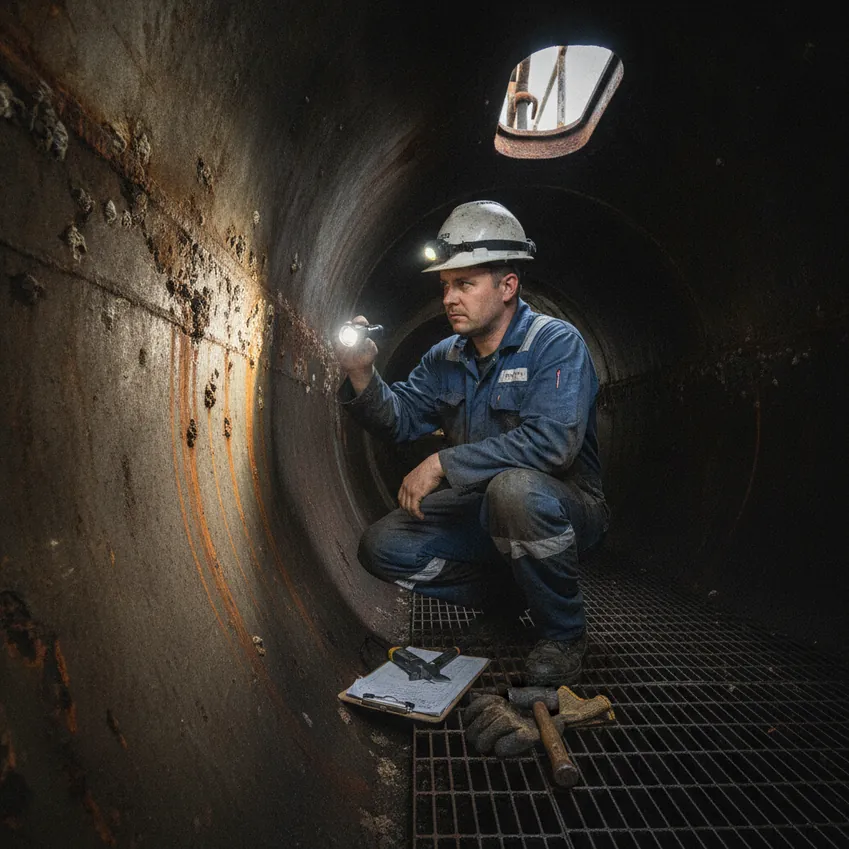
Marine propulsion systems and hull structures operate under conditions that few other industrial environments match. Salt water, pressure differentials, biofouling, and constant mechanical stress combine to degrade components in ways that only close visual examination can reliably detect. Maritime inspection is not a regulatory formality, it is the practical foundation on which vessel availability, crew safety, and operational efficiency rest.
For engineers and fleet managers, the central challenge is gaining a clear view of components that are either submerged, enclosed within machinery spaces, or accessible only through narrow ports. Propeller shafts, stern tubes, sea chests, and engine internals all require inspection at regular intervals, yet pulling a vessel from service for drydocking carries real costs in lost operating time. The pressure to inspect thoroughly while minimising downtime has driven demand for high-resolution video endoscopes capable of reaching confined spaces without disassembly.
Regulatory frameworks add further weight to that demand. The IMO's Carbon Intensity Indicator, in force since 2023, rates vessels annually on operational efficiency, and a poorly maintained propulsion system directly affects a ship's CII rating. Keeping engines, fuel injectors, turbochargers, and hull coatings in documented, verifiable condition is now both a technical and a compliance requirement. EVi Scopes designs its video endoscope range specifically to support that kind of detailed, evidence-based ship inspection across vessel types and access geometries that vary considerably in their demands.
Gaining a reliable view inside a ship's propulsion or hull structure is rarely straightforward. Access points are often narrow, angled, or positioned in spaces where a technician cannot stand upright. Turbocharger housings, fuel injection galleries, and stern tube assemblies may offer an opening of only a few millimetres, yet the surfaces inside must be assessed for corrosion, cracking, scoring, or coating breakdown with enough image clarity to support a maintenance decision. Standard rigid borescopes handle some of these geometries, but articulated video endoscopes become necessary wherever the inspection path bends or the target surface sits beyond a direct line of sight.
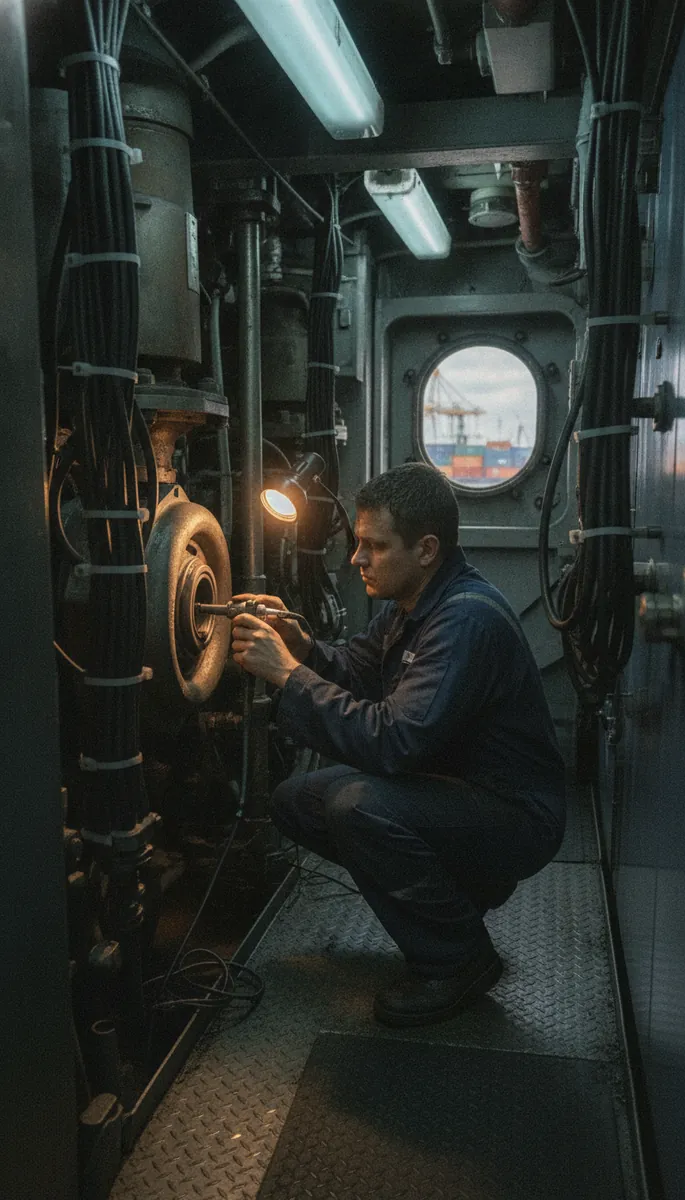
Underwater hull inspection brings a separate set of difficulties. Biofouling obscures coating defects, and corrosion pitting can be shallow enough to miss under poor lighting yet deep enough to compromise structural integrity over time. EVi Scopes addresses this with illumination systems that reveal surface texture accurately in low-visibility water or confined ballast tank spaces. UV-light variants operating at 365 nm activate fluorescent penetrant residues, making fine cracks visible in ways that white-light imaging alone cannot achieve. Inspection teams gain a clear advantage when assessing weld seams or coating failures on hull plating.


EVi Scopes covers the breadth of marine inspection requirements across its video endoscope and borescope lines. Compact probes in the EVi 5 and EVi 5.7 series reach narrow engine passages, while the larger-diameter EVi 6 and EVi 8.0 models handle deeper or wider cavities such as ballast tanks and sea chest interiors. Rigid EVi BS borescopes suit straight-line access paths, and the EVi R series addresses pipeline and channel inspection where a push-rod camera is the practical tool.
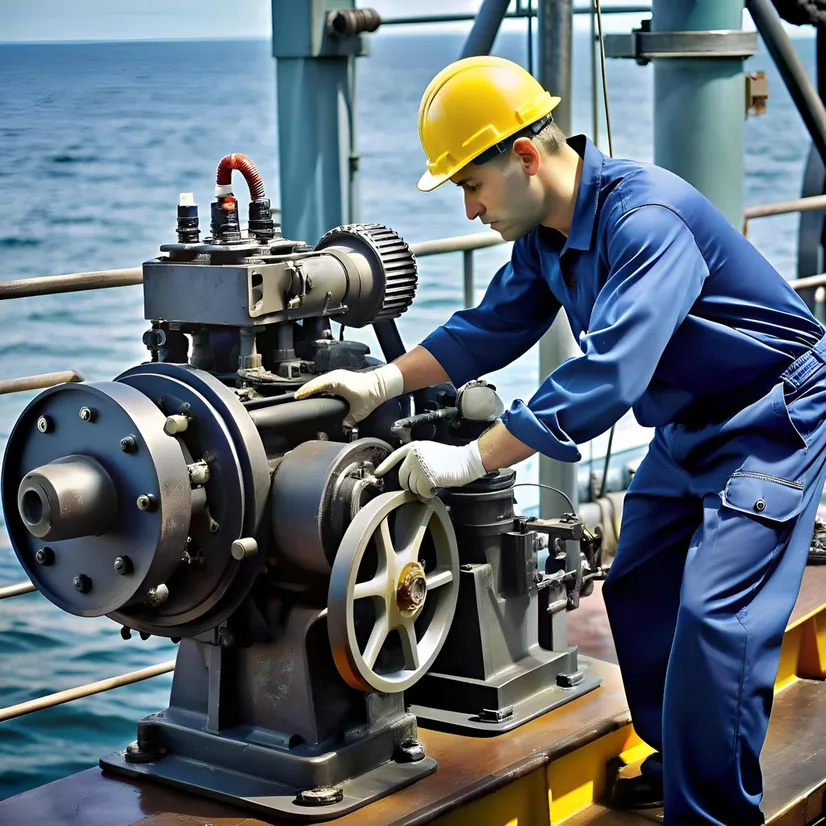
Resolution and illumination quality determine whether an inspection produces actionable findings or inconclusive images. EVi Scopes video endoscopes deliver high-definition imaging combined with selectable light sources, including white light, UV at 365 nm, and infrared variants, so the inspection team can adapt to the specific surface condition and access geometry rather than accepting whatever a single-mode instrument provides. That flexibility matters particularly during underwater hull inspection, where coating condition, weld integrity, and corrosion depth all respond differently to different wavelengths of light.
Older vessels and specialist craft frequently present access geometries that standard probe dimensions do not fit. EVi Scopes addresses this through its Series S custom configurations, where probe diameter, insertion tube length, articulation angle, and tip optics can be specified to match a particular inspection task. A naval vessel with tight machinery spaces, a ro-ro ferry with long horizontal shaft tunnels, or an offshore support vessel with complex ballast arrangements each places different demands on the inspection tool. Rather than adapting the inspection method to the available equipment, EVi Scopes allows the equipment to be built around the inspection requirement. The EVi TM and EVi TMS telescopic arm cameras extend that principle to overhead and elevated surfaces inside cargo holds or engine rooms, reaching areas where a handheld probe cannot maintain stable positioning.
The shift toward alternative marine fuels is changing which components inspection teams need to examine most closely. LNG-powered vessels introduce cryogenic fuel lines and valve assemblies that require different inspection protocols than conventional heavy fuel oil systems. Methanol and ammonia engines, now entering commercial service with major operators, bring their own corrosion chemistry and material compatibility questions. Dual-fuel engines, increasingly standard in newbuilds, contain additional fuel-switching components, injectors, and sealing surfaces that all need periodic visual verification. The IMO's CII framework means that any propulsion inefficiency from injector wear, turbocharger fouling, or hull coating degradation carries a direct regulatory consequence in the form of a lower annual rating. A vessel rated D or E faces operational restrictions, making documented inspection records a practical defence as much as a maintenance tool. EVi Scopes produces clear, timestamped video evidence of component condition, giving fleet managers the documentation needed to contest a rating or demonstrate corrective action. High-resolution maritime inspection footage, stored and retrievable, sits alongside class society certificates and port state control reports in the compliance record.
Whether industrial endoscope, uv inspection light or camera system – we deliver what you need for your visual inspection. Tailored to your needs. Direct, robust, reliable. Get expert advice now. We help you select and properly apply your inspection technology.
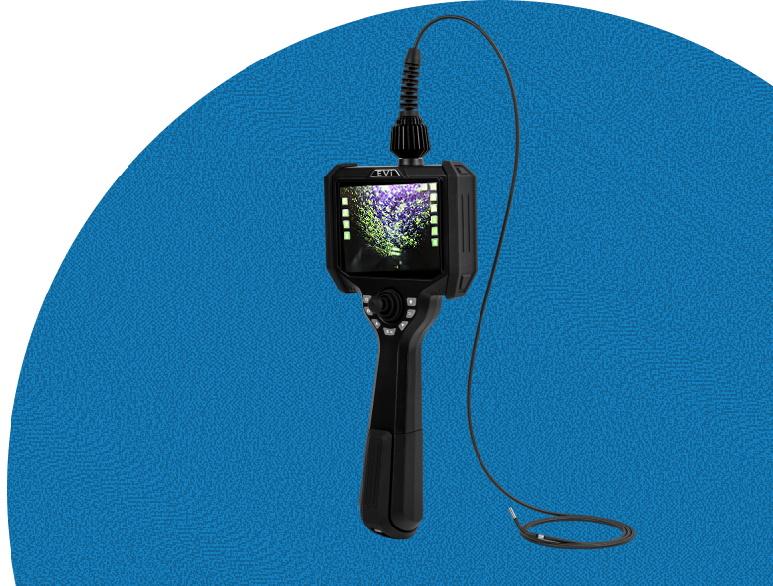
Effective ship hull inspection and propulsion assessment follow a repeatable sequence that begins before the probe enters the vessel. The inspection team identifies access points from technical drawings, confirms probe diameter and insertion length against the geometry, and selects the appropriate light source for the surfaces to be examined. Once inside the component, the operator advances the articulated tip systematically, pausing at areas of known wear risk such as bearing journals, injector seats, or weld heat-affected zones, and capturing video segments and still images at each. For underwater inspection in ballast tanks or sea chests, the inspector maps the surface in overlapping passes so that no section of plating or coating goes unrecorded. After the inspection, the footage is reviewed against previous records to identify any change in surface condition. A single image shows what a surface looks like today; a sequence of dated recordings shows how quickly it is changing. EVi Scopes endoscopes support that workflow through stable image quality and consistent colour rendering across sessions, keeping comparisons accurate rather than skewed by equipment variation.

More than just a clear view
Especially with pressure vessel testing or machine maintenance: Those who see early what's changing can act in time.
No paper chaos, no follow-up submissions – results can be saved, traced and presented directly. Especially important for proof to authorities or customers.
In quality assurance, the difference between “looks good” and “is flawless” sometimes makes all the difference. Good images help with decision-making.
When multiple people inspect together – live or with saved images – decisions can be made faster and clearer. That saves time and nerves.
FAQ
Because many people are interested: Here you will find practical answers to frequently asked questions about our product portfolio and our services – explained in an understandable way, directly from practical experience.
Questions? We are happy to help.The EVi 5 and EVi 5.7 series cover the narrow-diameter range most commonly required for injector galleries and fuel passages. Their slim probes reach confined channels without requiring component removal, and their articulated tips navigate bends that a straight instrument cannot follow.
Yes. The EVi 6 and EVi 8.0 models, along with the EVi R series pipe cameras, are well suited to ballast tank and sea chest interiors. Their insertion lengths and illumination output handle the larger cavities and lower ambient light conditions typical of underwater hull inspection work.
UV light at 365 nm activates fluorescent penetrant residues applied to weld seams or plating surfaces, making fine cracks and coating discontinuities visible as bright indications. White light shows surface texture and general corrosion, but it cannot reliably reveal tight cracks that fluorescent penetrant testing detects.
You provide the access port dimensions, insertion path geometry, and the surfaces to be inspected. EVi Scopes engineers then specify probe diameter, tube length, articulation range, and tip optics accordingly. Lead times vary by configuration complexity, so early engagement before a drydocking window is advisable.
Rigid EVi BS borescopes suit straight-line access paths where the inspection target sits directly ahead of the entry port. They deliver stable, high-resolution images in those geometries. Articulated video endoscopes become necessary wherever the path bends or the target surface lies off-axis from the access point.
Timestamped, high-resolution video recordings document component condition at a specific date and demonstrate corrective maintenance. Classification societies and port state control inspectors accept this footage as evidence of due diligence, which supports a vessel's CII rating appeal or confirms that a deficiency has been addressed.
The EVi R series uses a push-rod mechanism to travel along pipelines and drainage channels, making it the right tool for linear runs such as sea water cooling pipes. The EVi TM telescopic arm camera extends vertically or horizontally to inspect elevated surfaces inside cargo holds or engine rooms without scaffolding.
Inspection intervals depend on class society requirements, manufacturer recommendations, and the vessel's operational profile. High-load engines and vessels operating on alternative fuels with new injector or valve designs generally warrant shorter intervals. Your class society survey schedule sets the minimum, but condition-based monitoring may justify more frequent checks.
Yes. Dual-fuel and LNG engines introduce additional fuel-switching components, cryogenic seals, and injector variants that all require visual verification. EVi Scopes probes access these components through standard inspection ports, and the infrared light option assists with identifying heat-related surface changes in high-temperature zones.
The team should confirm access port diameter and depth from technical drawings, select the correct probe and light source, and ensure the component is depressurised and cooled to a safe working temperature. Having a second technician monitor the live feed during insertion improves both safety and image coverage.