


















Greater Safety in Ongoing Operations
Especially with pressure vessel testing or machine maintenance: Those who see early what's changing can act in time.

Every aircraft that carries passengers or cargo depends on a maintenance regime where nothing gets missed. Aircraft inspection has always been demanding work, but the internal geometry of modern engines, airframes, and hydraulic systems makes visual access one of the central technical problems. Turbine blades sit deep inside engine cores. Combustion chambers accumulate deposits and stress cracks that are invisible from the outside. Cooling passages in high-pressure turbine sections run through metal at tolerances measured in fractions of a millimeter. Getting eyes on these areas without disassembling the engine is exactly what aviation borescope inspection was designed to achieve.
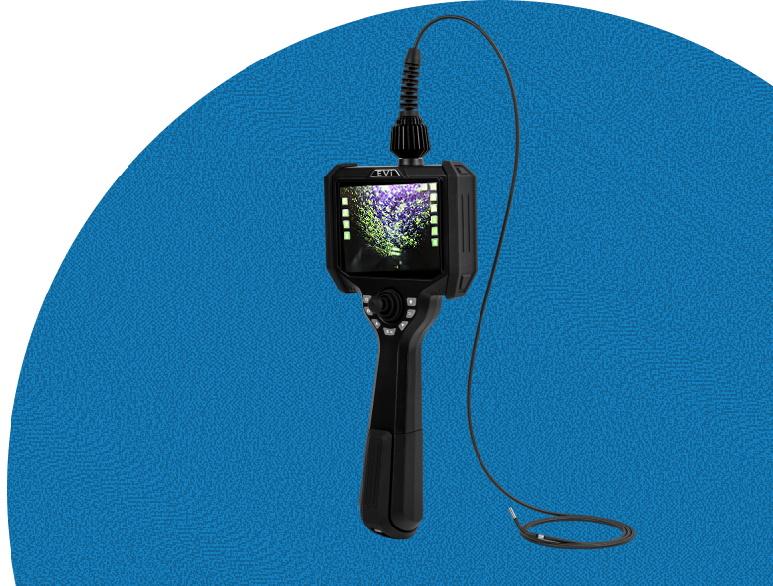
A video borescope threads a flexible or rigid probe through existing access ports, transmitting live imagery from inside the component. Technicians can assess blade tip clearances, check for foreign object damage, identify early-stage corrosion, and document findings with recorded footage, all while the engine remains on the wing. That ability to inspect without teardown is not a convenience. It directly shapes maintenance schedules, unscheduled removal rates, and the cost of keeping an aircraft airworthy. EVi Scopes develops and manufactures video borescopes and rigid borescopes built for exactly these conditions, with probe diameters, lighting options, and image quality matched to the access constraints and documentation standards that aerospace maintenance demands.
The physical reality of an aircraft engine creates inspection challenges that go beyond simply needing a small camera. Access ports are positioned for engine design reasons, not for inspector convenience, which means probe routing often involves tight bends through narrow passages while maintaining enough image stability to make a reliable assessment. At the same time, the surfaces being inspected carry genuine safety significance. A missed crack in a turbine blade or an undetected coating loss on a combustion liner can escalate into a serious failure if the aircraft returns to service without corrective action. Inspectors carry that responsibility on every borescope run.
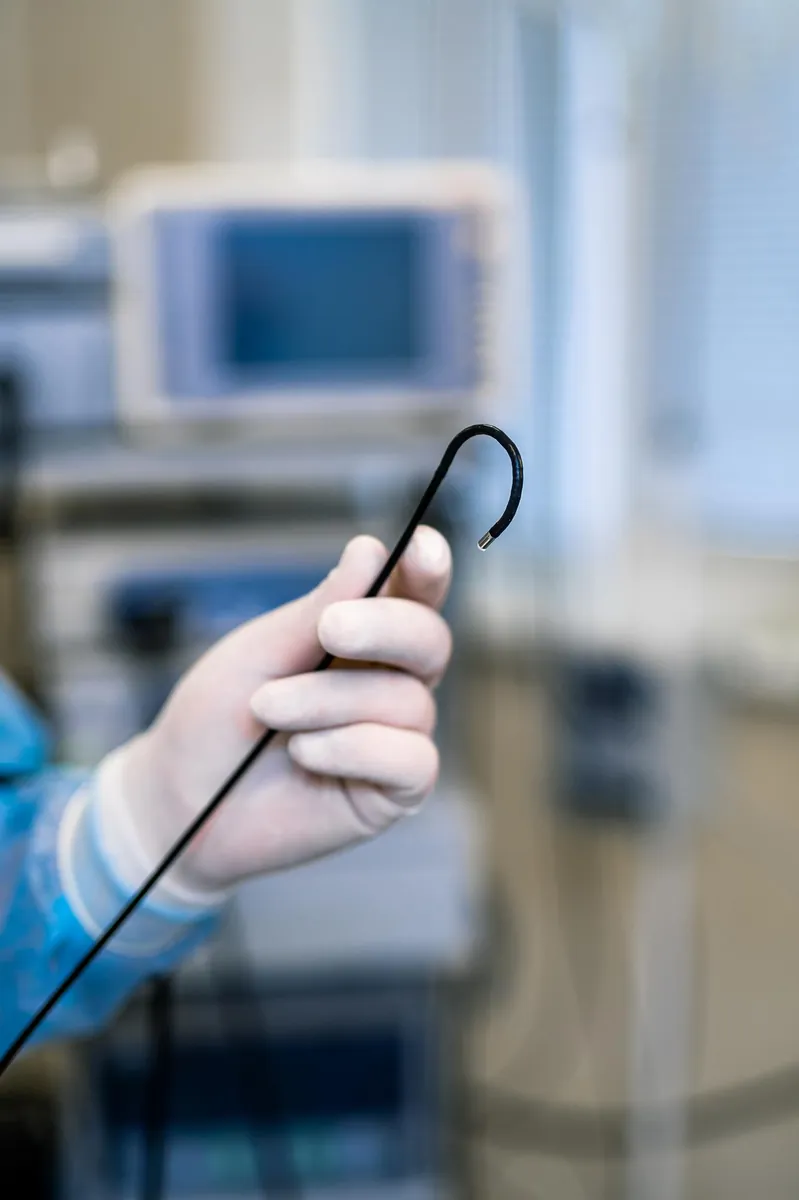
Beyond physical access, aviation maintenance operates under strict documentation requirements. Regulatory frameworks require that inspection findings be recorded, traceable, and reproducible. A borescope system used in aircraft engine borescope inspection must produce imagery clear enough to distinguish relevant indications from surface artifacts, and it must support recorded output that satisfies airworthiness documentation. Probe diameter, field of view, depth of field, and lighting all interact to determine whether an indication is visible and classifiable. That is why instrument selection matters as much as inspector technique, and why EVi Scopes builds its systems around both demands equally.


EVi Scopes supplies video borescopes, rigid borescopes, and rod-lens probe systems suited to the range of tasks that come up in aerospace maintenance. The EVi 5, EVi 5.7, and EVi 6 series cover different probe diameters and articulation requirements, while the EVi BS rigid borescope series addresses applications where straight-line access is available and optical resolution is the priority. Lighting variants include white light, UV at 365 nm for fluorescent penetrant inspection, and infrared, giving you the right illumination for the specific indication type you are looking for.

Aerospace maintenance environments are not gentle on equipment. Probes encounter residual heat, oil contamination, and the mechanical stress of repeated routing through curved passages. Image quality under those conditions depends on sensor performance, optics, and how the probe tip handles thermal variation. The EVi series video borescopes are built with these operating realities in mind, delivering consistent image output even when working conditions are far from ideal. For borescope inspection services that need to produce reliable documentation across many inspection cycles, instrument durability is not a secondary consideration.
One area where instrument choice directly affects inspection outcome is lighting. White light illumination covers general visual inspection of blade surfaces, seal areas, and combustion deposits. UV lighting at 365 nm activates fluorescent penetrant indications, making surface-breaking cracks visible in components that have been prepared with penetrant. Infrared variants support thermal contrast applications. Having the correct lighting integrated into the probe means you are not working around a limitation during the inspection itself. EVi Scopes also produces custom configurations through its Series S line, so if a standard probe diameter or working length does not fit your access geometry, a purpose-built solution is available rather than a workaround.

Instrument quality sets the ceiling on what is detectable, but the inspector's ability to interpret what appears on screen determines what actually gets found. In aircraft engine borescope inspection, the difference between a serviceable surface condition and a rejectable indication often comes down to understanding how lighting angle, probe distance, and field curvature affect the apparent size and depth of a feature. Blade leading edge erosion looks different depending on whether the probe is centered in the gas path or angled from an adjacent port. Combustion liner cracking follows predictable patterns tied to thermal cycling, so knowing where to look and what geometry to expect makes the inspection faster and more reliable. Coating degradation on high-pressure turbine blades often appears as a change in surface texture before it becomes a measurable loss, and recognizing that early stage requires familiarity with what a healthy coating looks like under the same lighting conditions. At EVi Scopes, documentation discipline reinforces all of this. Recording still images and video at consistent probe positions across successive inspections gives maintenance teams a concrete baseline for trend monitoring, which is how interval-based borescope programs catch developing issues before they drive an unscheduled removal.
Whether industrial endoscope, uv inspection light or camera system – we deliver what you need for your visual inspection. Tailored to your needs. Direct, robust, reliable. Get expert advice now. We help you select and properly apply your inspection technology.
A typical aircraft engine borescope inspection begins with identifying the correct access ports for the engine type and the zones specified in the maintenance manual. The probe diameter must clear the port without forcing, and the articulation range needs to cover the required field of view for each stage being assessed. Once the probe is positioned, the inspector works methodically through each blade row or liner segment, adjusting probe depth and tip angle to bring each surface into focus. Findings are documented with still captures and video segments tagged to the relevant engine zone. After the inspection, the recorded footage supports the written report and gives the maintenance organization a visual record that can be reviewed by a second inspector or retained for trend comparison at the next interval. For engines on a scheduled borescope program, that accumulated record becomes genuinely useful data. EVi Scopes instruments support this workflow through stable image output, integrated recording, and probe configurations that fit the access geometry of the engines most commonly encountered in commercial and defense maintenance. The goal at every step is a finding record clear enough to make the airworthiness decision straightforward.

More than just a clear view
Especially with pressure vessel testing or machine maintenance: Those who see early what's changing can act in time.
No paper chaos, no follow-up submissions – results can be saved, traced and presented directly. Especially important for proof to authorities or customers.
In quality assurance, the difference between “looks good” and “is flawless” sometimes makes all the difference. Good images help with decision-making.
When multiple people inspect together – live or with saved images – decisions can be made faster and clearer. That saves time and nerves.
FAQ
Because many people are interested: Here you will find practical answers to frequently asked questions about our product portfolio and our services – explained in an understandable way, directly from practical experience.
Questions? We are happy to help.Most turbine engine access ports accept probes between 4 mm and 6 mm in diameter. The EVi 5 and EVi 6 series cover this range. Always confirm the port specification in the engine maintenance manual before selecting a probe, as forcing an oversized probe risks port damage.
Borescope inspection assesses internal condition without disassembly, but it cannot replace teardown when a finding exceeds serviceable limits. It is most valuable for on-wing trend monitoring and for confirming whether a teardown is actually necessary before scheduling one.
UV lighting at 365 nm activates fluorescent penetrant indications on prepared surfaces, making surface-breaking cracks visible. White light covers general visual assessment. For suspected cracking, UV is the appropriate choice after penetrant preparation, not a substitute for it.
Record still images and video segments keyed to the engine zone and blade position specified in the maintenance manual. The written report references these files. Retained recordings allow a second inspector to review findings and support trend comparison at the next scheduled interval.
High-pressure turbine blades, combustion liners, and compressor stages are the most frequently inspected zones. Turbine blades receive the most attention because thermal and mechanical loading there is highest and coating degradation or cracking carries the greatest airworthiness consequence.
Inspection intervals are set by the engine manufacturer in the maintenance manual and may be adjusted by the operator based on operating environment and findings history. Engines in hot or sandy environments often run shorter intervals than those in temperate conditions.
Flexible video borescopes articulate at the tip and route through curved passages, making them suitable for multi-stage engine inspection. Rigid borescopes offer higher optical resolution along a straight line of sight and are preferred where direct access geometry allows it.
Yes. On-wing borescope inspection is the standard approach for scheduled checks. The probe enters through existing access ports, and the engine does not need to be removed from the aircraft. This is the primary reason borescope programs reduce unscheduled removal rates.
Residual oil contamination on the probe tip, thermal haze inside a recently run engine, and probe tip contact with surfaces all reduce image clarity. Allowing the engine to cool before inspection and cleaning the probe tip between port entries addresses most of these issues.
EVi Scopes produces custom configurations through its Series S line. If a standard probe diameter, working length, or tip angle does not fit your access geometry, a purpose-built probe can be specified. Contact EVi Scopes directly at support@eviscopes.com to discuss the application requirements.