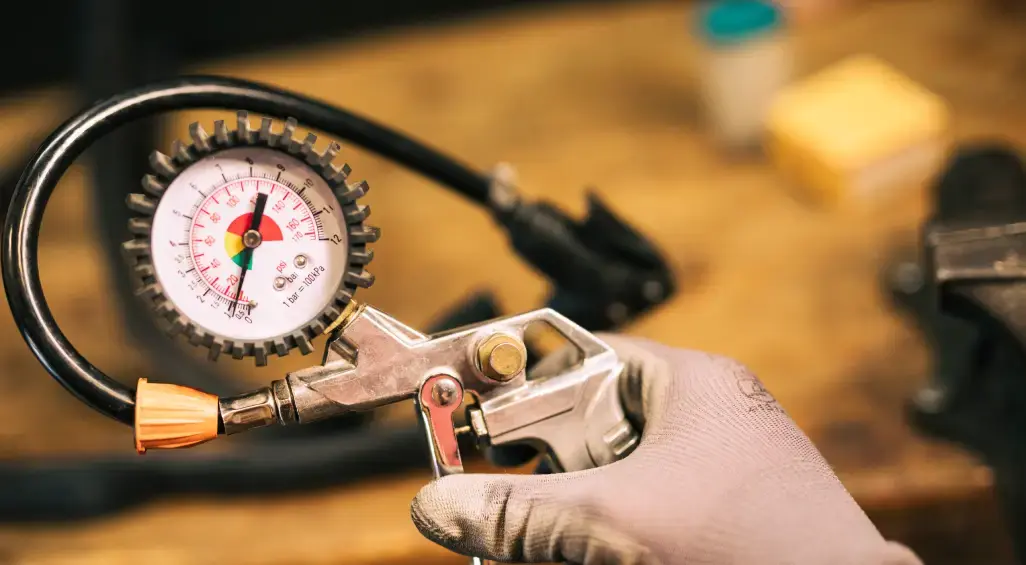
Be honest: When was the last time you thought about pressure vessel inspections? Probably when one was due. Or when someone from TÜV asked you, in a friendly but firm manner, for the latest inspection report.
Whether it’s a compressor in the workshop, a liquid gas tank on company grounds, or a roll-off container in the fleet—as soon as pressure is involved, it becomes an official matter. The good news: You don’t have to be an expert in regulations or testing technology to understand the essentials.
This article is aimed at everyone who bears responsibility—for technology, safety, and people. And at everyone who likes things to be clear and easy to understand.
Imagine a pressure vessel as a silent giant. Often unassuming on the outside, but under tension on the inside. That’s exactly why the law requires regular inspections: Is everything still working properly? Are there any early signs of cracks, corrosion, or other weaknesses?
During a pressure vessel inspection, the vessel is inspected either from the outside or—depending on the regulations—from the inside as well. In some cases, a so-called strength test is also performed, which specifically checks for leaks. Sounds technical? It is. But it’s also necessary.
The requirements of the Operational Safety Ordinance (BetrSichV) sometimes sound as if they were intentionally worded in a complicated way. At its core, however, it’s exactly what the name says: safe operation.
In addition, there are technical rules (e.g., the TRBS) and, for certain containers—such as skip and roll-off containers—special guidelines, such as DGUV Information 214-016.
And if you’re now thinking, “Oh, that only applies to the big players,” here’s a quick reality check. Even a small compressor may be subject to inspection.
Of course, you don’t have to report every small pressure vessel. But: Starting at an operating pressure of 0.5 bar and a volume exceeding 1 liter, it becomes relevant. And even more so at higher values.
Frequently asked questions we encounter:
Who is authorized to perform inspections? Depending on the classification, either a qualified person or an approved inspection body (ZÜS)—for example, TÜV or DEKRA.
Perhaps your municipality, company, or organization uses roll-off containers—for waste disposal, disaster response, or transporting liquids. If so, you may already be familiar with the topic: The inspection of set-down and roll-off containers according to DGUV Information 214-016 prescribes its own specific rules.
Because these containers are often used outdoors, they are subject to high levels of wear and tear. Hatches, weld seams, rubber seals—everything must be inspected regularly for damage. Rust can form unnoticed, especially on the inside. With the naked eye? No chance. Fortunately, there’s technology that makes exactly that visible—more on that later.
Liquefied gases are convenient—but they’re not without their risks. Anyone who operates a liquefied gas tank knows: Internal tank inspection for liquefied gas tanks is mandatory. And it’s not exactly easy, because you’re literally working in the dark.
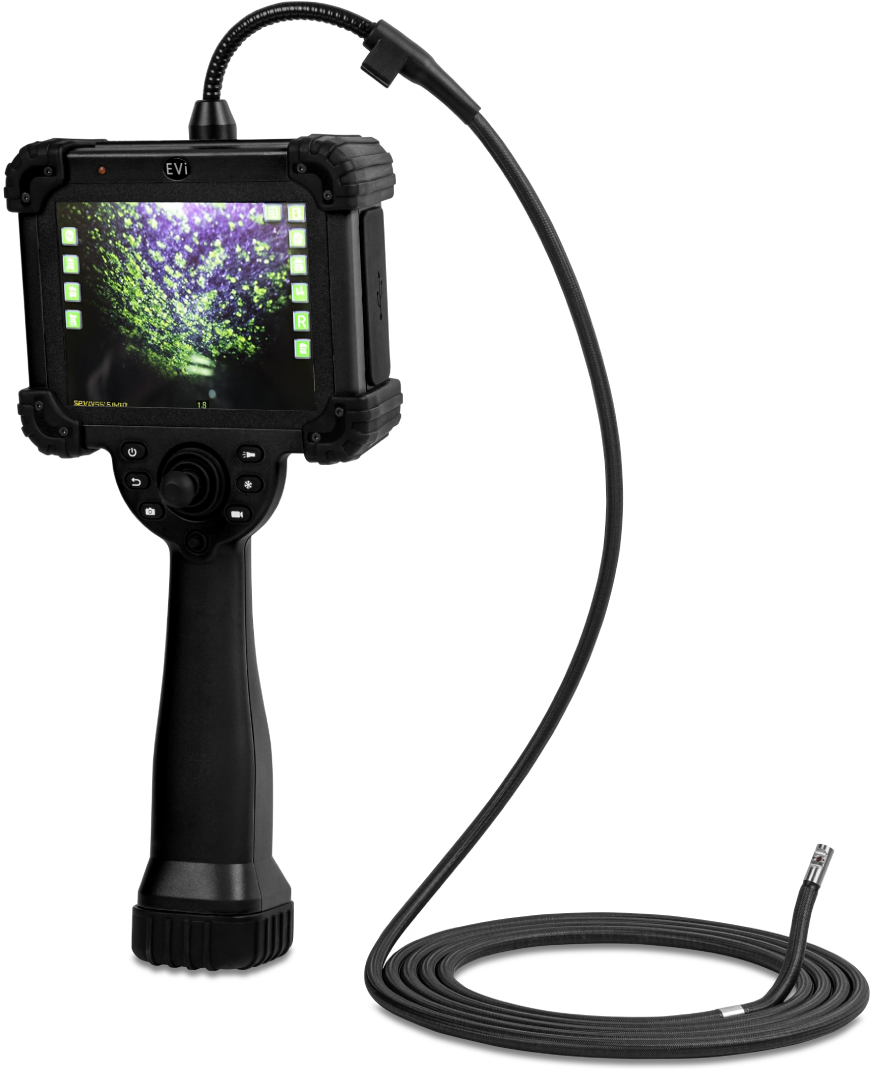
The solution? High-resolution video endoscopes with flexible probes and powerful LED lighting. These allow you to access even narrow openings without having to completely disassemble the tank. That saves time—and stress.
Good planning helps—and prevents unpleasant surprises. Here are the standard inspection intervals at a glance:
And the costs? That’s another common question:
How much does a pressure vessel inspection cost? It depends. Size, location, scope of the inspection—it all plays a role.
Now comes the part that’s often underestimated: the technology.
Many inspectors today work with video endoscopes, borescopes, and camera systems that deliver crystal-clear images. This makes it possible to visualize—and document—even the tiniest cracks, pockets of corrosion, or deposits.
The advantage? In many cases, it eliminates the need for time-consuming disassembly. And you can really see what’s going on. In real time. In color. With zoom.
A good system isn’t just recognized by its image quality. It’s also about how robust it is. How flexible the probes are. Whether the lighting is sufficient. And whether there’s someone available who can quickly help out when in doubt.
EVi Scopes from southeast Berlin understands these requirements exactly. The company offers a wide range of video endoscopes, borescopes, camera systems, light sources, and the right accessories—for anyone who regularly performs inspections.
And: The people there know what they’re talking about. No glossy marketing, just honest advice and technology that works.
Perhaps this article has made it clearer to you when and why a pressure vessel inspection is necessary. Perhaps you’ve just asked yourself when your liquid gas tank was last inspected from the inside. Or maybe you’re thinking about how to be better prepared for your next TÜV pressure vessel inspection.
No matter where you stand right now: Those who inspect bear responsibility. And those who work with good technology often make things easier—and safer—for themselves.
If you’d like more information, it’s worth taking a look at www.eviscopes.com. There you’ll find not only equipment but also answers—perhaps exactly what you need for your next inspection?
EVi Scopes offers customized video endoscopy solutions for industry, maintenance, and quality assurance. What are your requirements?
Contact EVi Scopes now
+49 30 5600 7149Whether it's a video endoscope, UV lamp, or camera system...